Stud Bolts vs Bolts on Flanges: When to Use Which on Oil & Gas Piping, Equipment Covers and Turnarounds
A pump-around line on a crude unit was opened for inspection on day three of a turnaround. The crew pulled the flange apart, checked the gasket, dropped a new spiral-wound in, and re-bolted. On the first re-pressurisation the joint wept at three bolt holes. The turnaround lead looked at the circle and saw the problem immediately: the warehouse had issued heavy hex bolts instead of double-ended studs, and the crew had run them up to the torque table built for B7 stud sets. The bolts were the same diameter, the same grade, the same coating. The joint still leaked, because the stud and the bolt are not the same hardware once you look at thread engagement, nut rotation and gasket seating.
That failure pattern repeats on MENA refinery and petrochemical sites every turnaround season. A flange spec calls out "stud bolt, A193 B7, 1-1/8"-8 UNC x 6-1/2", two heavy hex nuts per stud," and the PO comes back line-for-line as "bolt, A193 B7, 1-1/8"-8, 500 pcs" because someone read "bolt" as the generic word for threaded fastener. On day one the difference is invisible. Six months later, after thermal cycles and a couple of ambient swings, the joint relaxes, the gasket unwinds at one hole, and the unit has to be taken down on unscheduled work.
Gangluo supplies double-ended studs, tap-end studs and heavy hex bolts to ASTM A193 / A320 with matched nuts to ASTM A194, for oil and gas flange, equipment and piping bolting across refinery, petrochemical, gathering and processing service in the MENA region. This guide covers what the two forms actually control on a flange, when a head-type bolt is acceptable and when it is not, how torque and tensioning differ on a stud versus a bolt, and the dimensions an RFQ should carry so the returned hardware is the hardware the flange design called for.
Gangluo Stud vs Bolt Quick Reference
- Double-ended stud: threaded both ends, no head, two heavy hex nuts, the customary form on refinery/petrochemical pressure flanges
- Tap-end stud: one end threads into a tapped flange or bonnet, nut on the other side
- Head-type bolt: hex or heavy hex head on one end, nut on the other, for covers and one-side-access positions
- Grade ladder: A193 B7 / B7M high-temp flange; A320 L7 / L7M low-temp; A307 Grade B low-duty
- Nut pairing: A194 2H / 2HM for B7; A320 7 / 7M for L7
- Sizes: 1/2" to 3" imperial; M16 to M64 metric equivalent on request
- Threads: UNC / UNF or metric 6g; rolled threads where fatigue matters
- Certification: EN 10204 3.1 per heat; 100% hardness on sour B7M lots
1. The Two Forms: What the Geometry Actually Controls
The confusion starts because both are "a bolt with a nut." The geometry decides which side of the flange you work on, how the load distributes, and how the joint behaves after a thermal cycle.
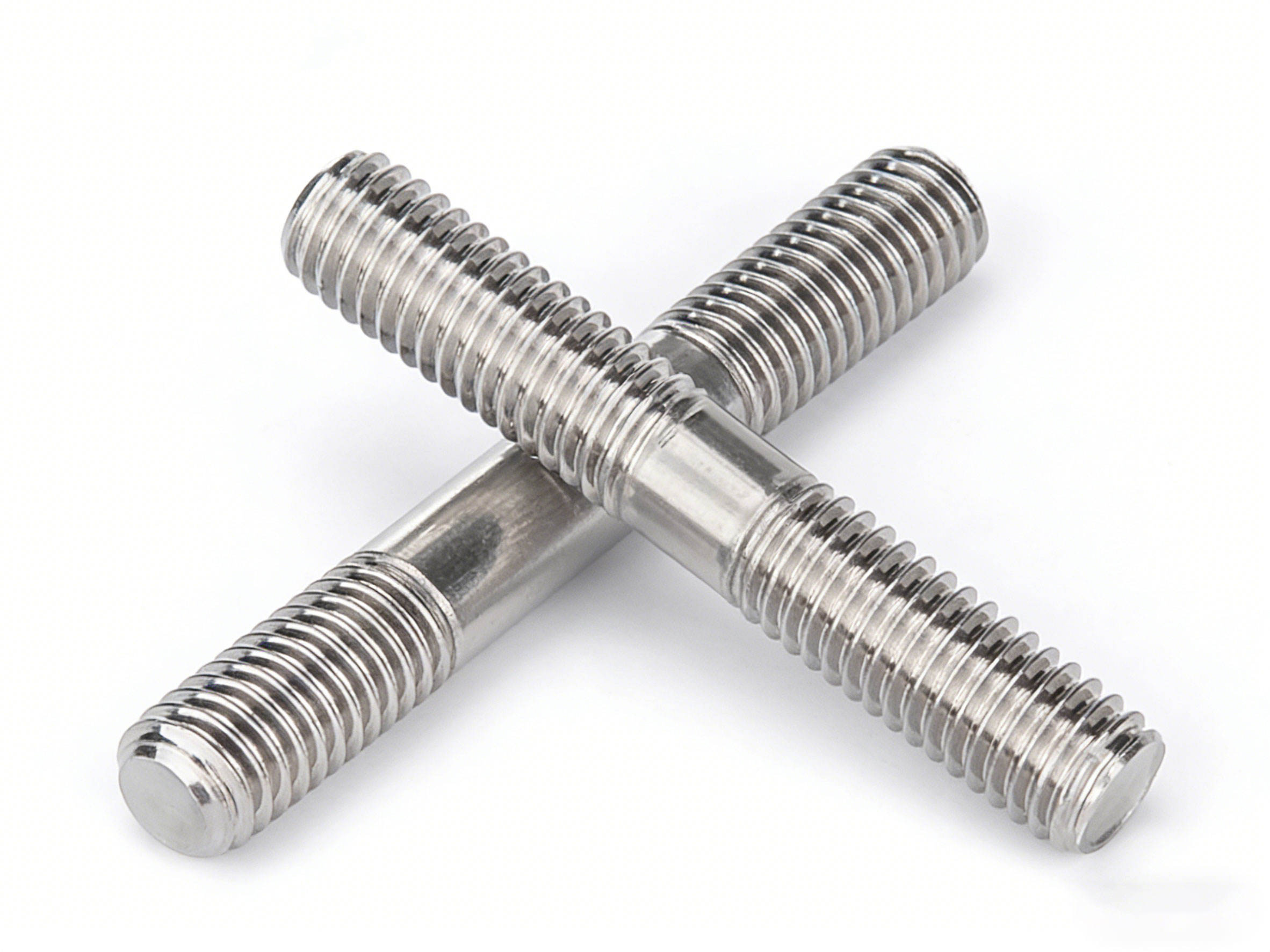
- Double-ended stud. A cylindrical bar, threaded at both ends to a controlled length, with an unthreaded grip in the middle. It passes through both flange holes and takes a heavy hex nut on each side. There is no head. The clamp load is applied by rotating one or both nuts, and the stud itself sees pure tension along its whole free length.
- Tap-end stud. One end is threaded shorter and runs into a tapped hole in a flange, bonnet or valve body; the other end is threaded longer and takes a nut. Used where one flange half is a casting with a tapped bore rather than a through-hole.
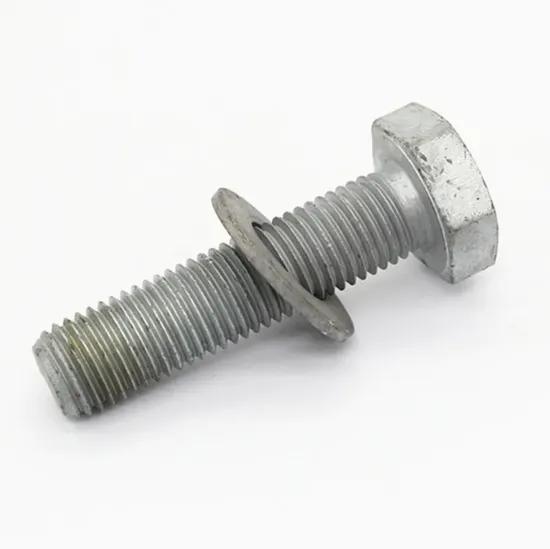
- Head-type bolt. A bar with a formed head on one end (regular hex, heavy hex, or socket head) and threads on the other. It passes through both flange holes and takes a nut on the far side. The head sits against one flange face; the nut runs down on the other.
The procurement point: the product form is part of the flange specification, not a preference. A double-ended stud and a heavy hex bolt of the same nominal diameter take the same wrench on the nut, but the stud has no head to seat against the flange face, and the bolt has a head that occupies one side of the circle. When an RFQ says "B7 bolt, 1-1/8", 200 pcs" without "stud" or "double-ended," the supplier has to guess which form the flange needs.
2. Why Refinery and Petrochemical Practice Favors Studs on Pressure Flanges
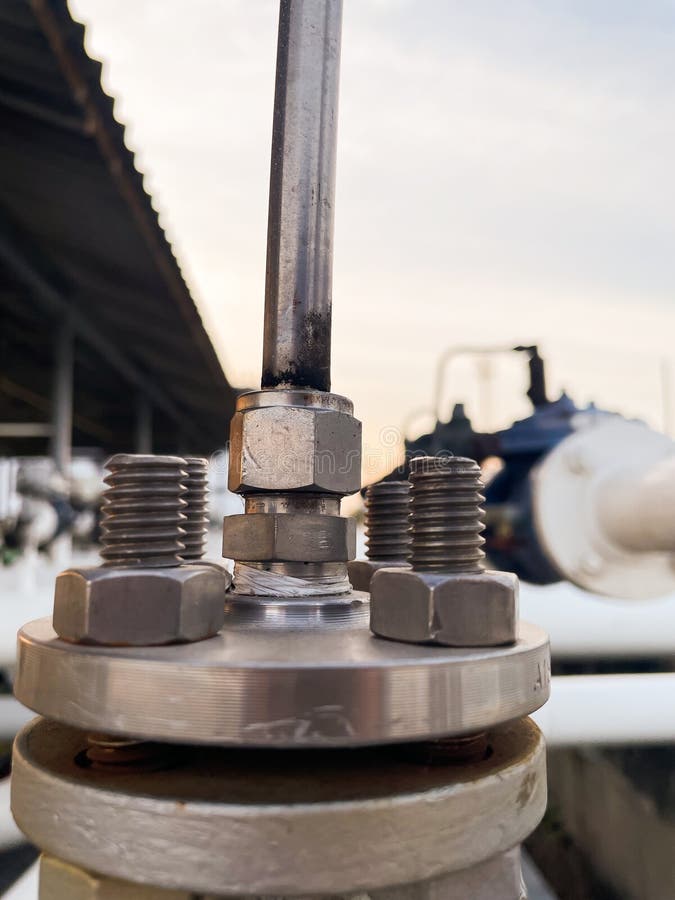
ASME B16.5 and B16.47 flanges are, in common refinery and petrochemical practice, conventionally bolted with double-ended studs and two heavy hex nuts. That convention is not a mandatory ASME requirement — B16.5 itself does not dictate the fastener form — but it is the near-universal practice in hydrocarbon service, and it comes from four practical points.
- Thread engagement on both sides. On a stud, both ends thread into nuts, so the load path is symmetric. The nut on each side rotates against a hardened washer, and the stud stretches evenly. On a head bolt, the head is formed, not threaded; it seats against the flange face and never rotates. The clamp load is developed entirely on the nut side, which tends to produce a somewhat asymmetric stretch distribution along the shank — the practical significance depends on shank-to-thread area ratio, grip length and the specific turn-up procedure, and on most conventional flanges the effect is secondary to the access and replacement points below.
- Both sides accessible for turn-up. A flange on a pipe rack is worked from both sides during a turnaround. The crew can run up the nuts from either face. A head bolt forces the wrench onto the nut side only, because the head is captive on the other face. On a flange tucked against a wall or inside a steel structure, the head side may be the inaccessible side.
- Replacement without threading out. A corroded or seized stud end can be cut out and replaced; the stud comes out through the flange hole. A corroded head bolt has to be driven out from the head side, which on an installed line may require cutting the head off and driving the shank through.
- Thermal cycling. Refinery service cycles between ambient and process temperature, and the flange gasket relaxes. A double-ended stud allows re-torquing from both sides after the unit settles. On a head bolt, re-torque happens only from the nut side.
The result: on pressure-boundary flanges carrying hydrocarbon, steam or hot oil in refinery and petrochemical service, common operator practice is to specify a double-ended stud with two heavy hex nuts. The project spec may call out a head bolt on a small, low-pressure, easily accessible equipment cover, but that is a position-by-position exception, not the norm.
3. When a Head-Type Bolt Is Acceptable
Head bolts are not wrong everywhere. They are the right form where one of the following is true:
- Low-pressure equipment covers, handholes and manways where the flange class is small (150 lb or PN16 and below) and the gasket is a soft cut gasket rather than a spiral-wound.
- Positions where the head side is the accessible side and the nut side is buried against a vessel wall or insulation.
- Non-pressure-boundary items: equipment guards, bearing caps, pump casing half-joits, gearbox covers where the bolt is not the pressure boundary.
- Valves and flanged accessories where the manufacturer ships the bonnet with head bolts tapped into the body.
The rule of thumb: if the joint carries pressure, if it is on a B16.5 / B16.47 flange, if the gasket is a spiral-wound or serrated metal jacket, or if the service cycles in temperature, use the double-ended stud. If the joint is a non-pressure cover on equipment you can reach from both sides, the head bolt is the economical choice.
Where the joint is a structural splice rather than a pressure flange, the head-form decision is different; we cover that side in the hex bolts vs heavy hex vs machine bolts guide. The pressure-flange logic in this guide is about studs versus head bolts on gasketed joints.
4. Torque vs Tensioning on a Stud Joint
Once the stud form is chosen, the installation method sets how much clamp load actually reaches the gasket. Two methods are in common use on refinery flanges.
- Torque method. A calibrated wrench applies torque to the nut. The torque is converted to bolt tension through the nut factor K: T = K x D x F, where T is torque, D is nominal diameter, F is target tension. The K value is set by the coating and lubrication on the stud and nut. As indicative ranges that vary by spec, surface condition and lubrication, a PTFE dry-film coated B7 set has a documented, low, stable K around 0.08 to 0.10. A plain, oiled B7 set runs K around 0.18 to 0.22. A rusty, dry stud runs K above 0.30 and scatters widely. Always confirm the K from the supplier's measured lot data or the project spec rather than using these ranges directly.
- Direct tensioning. A hydraulic tensioner pulls the stud directly to a measured elongation or load, then releases. The nut factor is removed from the equation. Tensioning is used on large-diameter studs (typically 1-1/2" and above), on high-temperature service where gasket relaxation matters, and on sour or critical service where the scatter of torque would put some studs under-tensioned and some over-tensioned.
The field failure pattern: a torque table built for PTFE-coated B7 is applied to plain black B7 studs delivered without the dry film. The applied torque is half of what it should be for the higher K, the gasket never seats, and the flange weeps on start-up. The fix is not a higher torque value; it is matching the torque table to the delivered friction condition. When you order studs from us, the coating and the measured nut factor are stated on the quotation and the certificate, so the turnaround crew uses the procedure that matches the delivered hardware.
The full turn-up sequence, including the gasket seating passes, the cross-pattern and the final verification, is covered in the ASME PCC-1 refinery turnaround flange bolting guide. The point here is that the stud form and the tensioning method have to be chosen together: a tensioner pulls a stud; it does not pull a head bolt through a flange hole.
5. Gasket Seating and the PCC-1 Turn-Up
A flange does not seal on the first torque pass. The gasket has to be compressed to its seating stress, and that compression has to be distributed evenly around the circle. ASME PCC-1 (Guidelines for Pressure Boundary Bolted Flange Joint Assembly) sets the turn-up logic that MENA operator specs reference.
- Initial seating pass. The bolts are tightened to a fraction of the final torque, in a cross-pattern, to pull the flanges down evenly onto the gasket.
- Intermediate passes. The torque is raised in steps, again in a cross-pattern, so the gasket compresses progressively rather than squashing at one point.
- Final pass. The bolts are brought to the target torque or tension in the final cross-pattern, and then a pass around the circle in sequence to verify every bolt has reached the value.
- Hot torquing where specified. PCC-1 does not universally require hot torquing; it is called out only on certain high-temperature services (typically above roughly 260–300 C / 500–575 F, depending on the operator spec and gasket type) where, after the unit reaches operating temperature and is shut in for a re-check, the bolts are re-torqued to compensate for initial gasket relaxation. On lower-temperature or non-critical service, hot torquing is usually not required.
The stud form matters here because both nuts on a double-ended stud are accessible for the cross-pattern and for the hot-torque check. A head bolt leaves one side captive, which is why PCC-1 turn-up on a stud circle is straightforward and on a head-bolt circle is a compromise.
The gasket itself is part of the design. A spiral-wound with inner and outer rings on a Class 300 flange needs a higher seating stress than a soft cut gasket on a Class 150 cover. We supply the bolting to the gasket design the flange spec calls up; we do not design the gasket.
6. Nuts, Washers and Thread Engagement
A stud order is not complete with the stud alone. The nuts and washers set the joint behaviour.
- Stud nuts. A double-ended stud takes two heavy hex nuts to ASME B18.2.2, matched to the stud grade: A194 2H for B7, A194 2HM for sour B7M, A320 Grade 7 / 7M for L7 / L7M low-temperature service. The nut is a matched lot, not a catalog hex nut.
- Washers. A hardened flat washer goes under every rotating nut. On a stud, that means two washers per stud, one under each nut. The washer spreads the bearing load on the flange face and protects the flange from nut rotation. We cover washer selection and hardness matching in the hardened washers for oil and gas flanges guide.
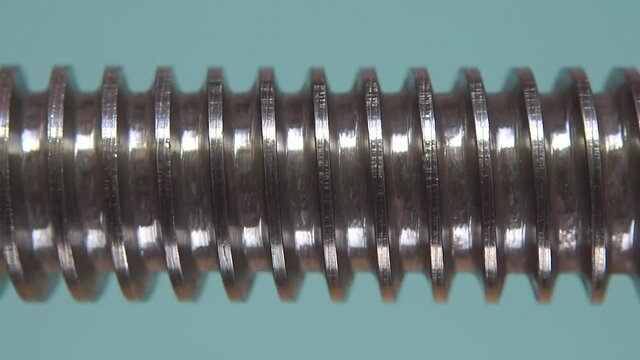
- Thread engagement. The nut should thread onto the stud so that at least one thread protrudes past the top of the nut after tightening. On a double-ended stud, the threaded length on each end is long enough to accommodate the nut, the washer and the protrusion. A stud that is too short in the threaded run leaves the nut flush, which the inspector flags.
- Tap-end engagement. On a tap-end stud running into a bonnet, the threaded engagement into the casting is longer than the nut side, because the load transfers into the housing material rather than a nut.
The friction condition on the nut side is the same K that sets the torque table. PTFE dry film on the stud threads and under the nut gives a low, documented K. Anti-seize applied on site changes K; if the crew applies anti-seize to a PTFE-coated stud, the torque table has to be reissued for the combined condition.
For precision threaded work where the stud length, threaded runout and protrusion are controlled to the millimetre, we supply double-ended and tap-end studs to the drawing length, covered in the B7 threaded rods and double-ended studs guide.
7. Materials: B7, B7M, L7, L7M and the Sour Question
The stud grade is set by the service temperature and the sour condition.
| Grade | Standard | Min tensile | Typical service |
|---|---|---|---|
| A193 B7 | ASTM A193 | 125 ksi (860 MPa) | High-temperature hydrocarbon, steam, hot oil |
| A193 B7M | ASTM A193 | 125 ksi, hardness-capped | Sour (wet H2S) service, NACE MR0175 / ISO 15156 |
| A320 L7 | ASTM A320 | 100 ksi (690 MPa) | Low-temperature service, down to -46 C |
| A320 L7M | ASTM A320 | 100 ksi, hardness-capped | Sour low-temperature service |
| A307 Grade B | ASTM A307 | 60 ksi | Low-duty, non-sour, low-pressure covers |
The sour distinction is the one that drives the most rework. B7 is a quenched-and-tempered alloy stud at 125 ksi. B7M is the same chemistry and strength band, but with a hardness cap (typically 235 HB / 35 HRC maximum, per the project sour spec) and a lot-by-lot hardness report, because wet H2S service can cause sulfide stress cracking if the hardness is too high. It is worth noting that NACE MR0175 / ISO 15156 does not mandate a 235 HB cap across every sour environment: the acceptable hardness limit depends on the environmental severity — pH, H2S partial pressure, temperature and chloride level — and on the operator's sour service definition. In milder sour service the spec may accept higher hardness; in severe sour service the cap is enforced with 100% hardness readings. A B7 stud shipped to a sour unit without the B7M hardness cap fails inspection, and the lot has to be re-sorted or replaced. On MENA projects with NACE MR0175 / ISO 15156 scope, we ship B7M with 100% hardness readings per lot, not sample readings, and we confirm the sour severity definition against the operator spec before release.
The nut side follows: 2H for B7, 2HM for B7M. A 2HM nut is the hardness-capped sour companion. Mixing a B7 stud with a 2HM nut or a B7M stud with a 2H nut is a mismatch the inspector flags; the lot control on the certificate has to match.
8. Documentation MENA Inspectors Expect
On MENA refinery and petrochemical projects, the stud pack is traceable before the studs go into the joint.
- EN 10204 3.1 material certificate, per heat, with chemistry and mechanical properties.
- Hardness report per lot; 100% hardness on B7M / 2HM sour lots where the operator spec calls it up.
- Dimensional report: thread gauge fit (GO / NO-GO) on both ends, overall length, threaded length on each end.
- Coating report where coated (PTFE dry film thickness, or phosphate-and-oil condition).
- Heat-number traceability from bar mill certificate to the box label.
- Nut and washer lot numbers matching the stud lot on the same certificate pack.
For operator-witnessed critical flange lots (SGS, BV, TUV, or the owner's QA), we hold the lot for witness testing before shipment. The heat number on the box label is what lets the turnaround inspector tie the studs on a specific flange back to the certificate during the unit audit.
9. Supplier Evaluation Card
Use this card when comparing stud bolt and flange bolt suppliers for MENA refinery, petrochemical and turnaround work. The points below are what operator QA/QC and EPC procurement teams typically ask us to demonstrate on a pre-project qualification.
| Evaluation point | What to ask the supplier | Why it matters |
|---|---|---|
| Product form discipline | Do they ship double-ended studs, tap-end studs and heavy hex bolts as separate line items? | "Bolt" on the PO without "stud" invites the wrong form |
| Grade range | Can they cover B7, B7M, L7, L7M from one source? | Mixed-source stud and nut loses lot control |
| Matched nuts | Are 2H / 2HM, 7 / 7M nuts supplied as matched sets per lot? | A mismatched nut unloads the joint |
| Threaded length control | Do they hold the threaded runout on each end to the drawing? | Short thread leaves the nut flush |
| Sour hardness control | Is B7M / 2HM held at the hardness cap with 100% readings? | Sour flanges fail inspection on hardness |
| Friction condition | Is PTFE dry film or anti-seize applied with a documented K? | The torque table depends on the measured nut factor |
| Tensioner compatibility | Do they supply stud lengths that hydraulic tensioners pull without bottoming? | Large-diameter flanges are tensioned, not torqued |
| Certificate format | Are 3.1 certs in English, per heat, matching PO line items? | Inspectors stop the bolt-up if the pack does not match labels |
| Turnaround response | What is the repeat lead time for a mid-turnaround call-off? | Turnarounds do not wait for production schedules |
| Packaging | Are studs bagged with matched nuts and washers per flange circle? | Mixing nuts across circles loses lot control |
10. RFQ Dimensions: What to Send for a Complete Quotation
Stud RFQs come back with clarifying questions most often because only a nominal diameter and quantity are given. Send the following on the first request.
| RFQ field | Example | Notes |
|---|---|---|
| Product form | Double-ended stud, tap-end stud, or heavy hex bolt | Different geometry and nut logic |
| Standard | ASTM A193 / A320; ASME B16.5 flange class reference | Drives length and threaded runout |
| Grade | B7; B7M sour; L7 low-temp | State sour / H2S and service temperature explicitly |
| Diameter and thread | 1-1/8"-8 UNC, or M27 x 3 | Pitch must match the nut |
| Overall length | 6-1/2" double-ended, or per drawing | Measured overall on studs |
| Threaded length per end | Per drawing, e.g. 2-1/4" each end | Sets nut engagement and protrusion |
| Nuts and washers | Two heavy hex nuts + two hardened washers per stud | Supplied as matched sets |
| Flange class and rating | Class 300, 6" B16.5 | Drives stud count and torque target |
| Gasket type | Spiral-wound, soft cut, serrated | Drives seating stress and turn-up passes |
| Installation method | Torque to PCC-1, or hydraulic tensioning | Sets K documentation and stud length |
| Coating / lubrication | PTFE dry film, phosphate and oil, plain | Matches the torque-table nut factor |
| Quantity | e.g. 24 studs per flange, 12 flanges | Counted as stud-nut-washer sets |
| Certification | EN 10204 3.1; 100% hardness on sour lots; 3.2 witness if required | Agreed before production |
Send these fields, attach the flange list, and we return matched stud-nut-washer set quotations per flange circle, with product form, grade, coating and friction condition agreed before the first stud is packed.
11. Common Field Mistakes
- Ordering "bolts" for a pressure flange. A head bolt on a B16.5 Class 300 spiral-wound flange is the wrong form. Name the double-ended stud.
- Substituting B7 for B7M on sour service. B7 is not hardness-capped. Wet H2S causes sulfide stress cracking. Ship B7M with the hardness report.
- Torque table not matching the coating. PTFE-coated studs torqued with a plain-bolt K deliver double the intended tension. Match the table to the delivered friction.
- No protrusion above the nut. A stud threaded too short leaves the nut flush. The inspector flags it, and re-torquing later is impossible.
- Mixing stud and nut sources. A B7 stud with a 2HM nut is a mismatch. Ship the matched lot.
- Tightening a head bolt on an inaccessible side. The head side cannot be reached for turn-up. Use a stud on a flange you cannot reach from both faces.
- Skipping the cross-pattern. Running around the circle sequentially warps the flange and pinches the gasket. Follow PCC-1 cross-pattern.
- Hot torquing at the wrong interval. Re-check at the specified hot cycle, not on first start-up at full temperature.
- Changing coating mid-turnaround. A different coating changes K. Reissue the torque table or keep the friction condition constant.
FAQ
Q: What is the actual difference between a stud bolt and a bolt? A: A stud bolt (double-ended stud) is a cylindrical bar threaded at both ends with no head, passing through a flange and taking a nut on each side. A bolt has a formed head on one end and a nut on the other. On pressure flanges the stud is the default because both nuts are accessible for turn-up and re-torque, the load distribution is symmetric, and the stud can be replaced without driving a head out of the hole.
Q: Can I use a heavy hex bolt instead of a stud on a B16.5 flange? A: Only where the project spec explicitly allows it and the flange class and gasket type are low. Most hydrocarbon, steam and hot-oil flanges in refinery and petrochemical service are specified to double-ended studs, reflecting long-standing operator practice rather than an ASME mandate. Substituting a head bolt on a spiral-wound Class 300 flange without engineering approval is a non-conformance.
Q: What does B7M mean compared to B7? A: B7M is the sour-service companion to B7. Same chemistry and strength band, but with a hardness cap and lot-by-lot hardness testing to NACE MR0175 / ISO 15156, because wet H2S causes sulfide stress cracking on over-hardened fasteners. Pair B7M with a 2HM nut.
Q: Should I torque or tension large flange studs? A: Below roughly 1-1/4" diameter, torque to a calibrated PCC-1 procedure with the documented K for the delivered coating. Above 1-1/2", on high-temperature or critical service, hydraulic tensioning removes the nut-factor scatter and is the operator's preferred method. The stud length has to leave room for the tensioner pull; state the installation method on the RFQ.
Q: How many nuts and washers per stud? A: Two heavy hex nuts and two hardened flat washers per double-ended stud, one set on each side of the flange. The nuts and washers are lot-matched to the studs on the same certificate pack.
Q: What certificates come with a stud order? A: EN 10204 3.1 per heat, with chemistry, mechanicals, hardness (100% on B7M sour lots), thread-gauging records and coating thickness. 3.2 with SGS / TUV witness is arranged where the operator requires it.
Request a Quotation
Send the flange list, the flange class and rating, the gasket type and the installation method above, and we will return matched stud-nut-washer set quotations per circle, with product form, grade, length, coating, friction condition and documentation scope agreed before the first stud is packed, timed to your turnaround or construction window.
Email: engineering@glfastener.com, WhatsApp: +86 166 6309 4647
We supply refinery and petrochemical bolting as complete, documented packages, with the stud form and grade fixed at quotation so the delivered hardware matches the flange design rather than working against it.
Related guides: Oil & Gas Fastener Manufacturer & Stud Bolt Center, B7 Threaded Rods & Double-Ended Studs, ASME PCC-1 Refinery Turnaround Flange Bolting, Hex Bolts vs Heavy Hex vs Machine Bolts, Hardened Washers for Oil & Gas Flanges