Hex Bolts vs Heavy Hex Bolts vs Machine Bolts for Oil & Gas Flanges, Equipment and Structural Steel: Which One Goes Where
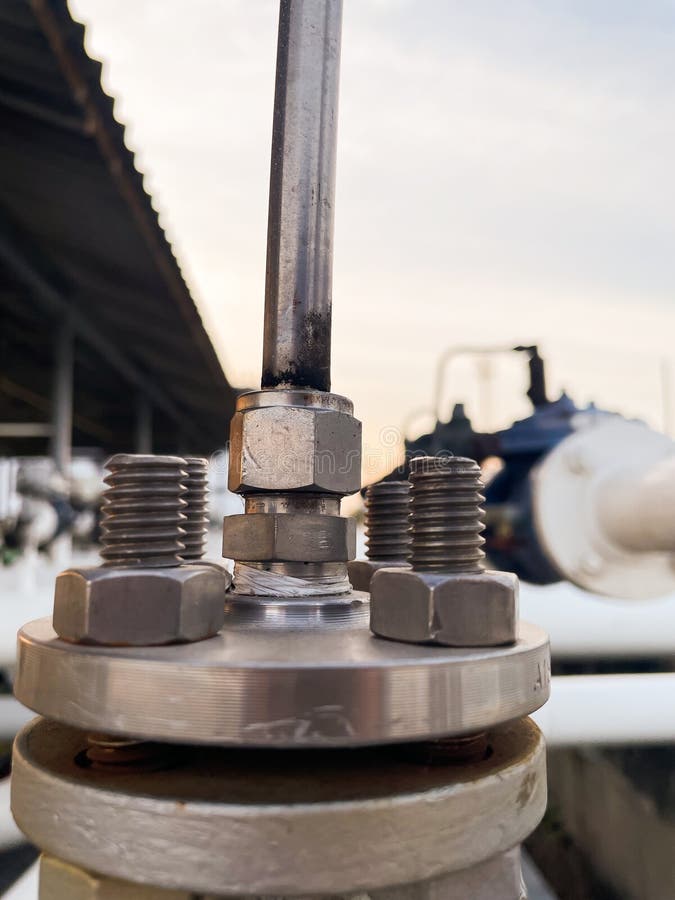
A flange circle on a refinery pipe rack is held by a ring of bolts. On paper the line reads "3/4"-10 x 2-1/2" bolt." In practice, the difference between that bolt staying sealed through a hydrotest and weeping at the flange face comes down to which product the warehouse actually picked: a regular hex bolt to ASME B18.2.1, a heavy hex bolt with the larger across-flats, or a machine bolt bought off a general-hardware shelf. They are the same diameter, they start with a nut, and the crew on day one cannot always tell them apart until the joint relaxes six months after start-up.
The field failure pattern on MENA refinery and petrochemical sites is familiar: a regular A307 hex bolt substituted onto a pressure flange where a heavy hex A193 B7 was specified; a machine bolt with a short thread run holding an equipment baseplate where the grip length should have left the threads out of the shear plane; an A325 structural bolt used dry on a faying surface that was meant to be the slip-critical path. None of these look like material failures. They are specification failures, and they are avoidable if the bolt form and the grade are named on the RFQ instead of left to whoever picks the line item.
Gangluo supplies hex bolts, heavy hex bolts and machine bolts to ASME B18.2.1 with matched nuts to ASME B18.2.2, in grades from A307 through A193 B7 and A325 / A490 structural, for oil & gas flange, equipment and structural bolting across refinery, petrochemical, gathering and processing service in the MENA region. This guide covers what each product form actually controls, where each one belongs on a typical unit, and the dimensions an RFQ should carry so the returned hardware is the hardware the joint was designed for.
Gangluo Bolt Form Quick Reference
- Regular hex bolt: ASME B18.2.1, standard across-flats, usually A307 Grade A
- Heavy hex bolt: ASME B18.2.1 heavy series, larger across-flats, for flanges and high-strength structural
- Machine bolt: ASME B18.2.1, partial thread, general machinery and equipment, usually A307
- Grade ladder: A307 A / B (carbon), A325 / A490 (structural), A193 B7 / B7M (high-temp flange)
- Companion nuts: regular hex nut for A307; heavy hex nut (A194 2H / 2HM) for heavy hex and B7
- Sizes: 1/4" to 2-1/2" imperial; M12 to M64 metric equivalent on request
- Threads: UNC / UNF or metric 6g; rolled where fatigue or preload matters
- Certification: EN 10204 3.1 per heat; 100% hardness on sour B7M lots
1. The Three Product Forms: What the Dimensions Actually Control
The confusion starts because all three are "a bolt with a hex head." The differences are in the head, the thread length and the joint logic:
- Regular hex bolt (ASME B18.2.1, regular series). The standard hex head with a defined across-flats dimension, a washer face under the head, and a body that is usually full-size or near-full-size. It is the general-purpose bolt. It is designed to pass through a clearance hole and take a nut on the other side, or to thread into a tapped hole. It is not the default for pressure-boundary flanges or slip-critical structural joints, because the head bearing area and the grade are both modest.
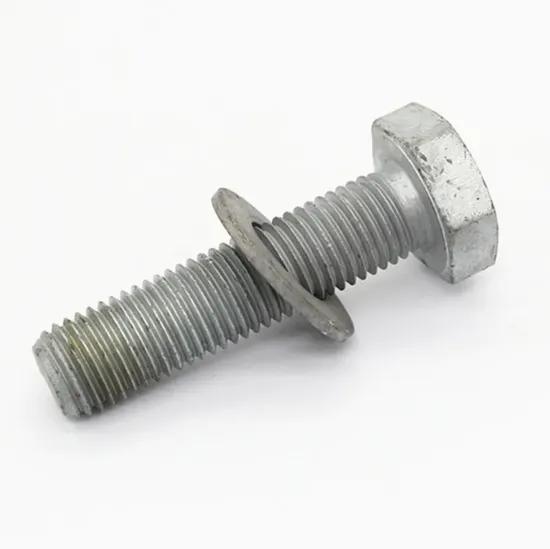
- Heavy hex bolt (ASME B18.2.1, heavy series). The head has a larger across-flats dimension than the regular hex bolt of the same nominal diameter. A 3/4" heavy hex bolt, for example, has a 1-1/4" across-flats head — the wrench opening normally associated with a larger nominal bolt — versus 1-1/8" for a 3/4" regular hex bolt. The larger head spreads the bearing load under the nut and the head, and it is the head form that mates with a heavy hex nut to ASME B18.2.2. Pressure-boundary ASME B16.5 and B16.47 flanges are conventionally bolted with double-ended studs and two heavy hex nuts rather than head-type bolts; where a project does specify a head-type bolt on such a flange, it must be a heavy hex bolt (the heavy hex head is the required form, not a regular hex). Beyond flanges, this is the bolt form used on high-strength structural connections (A325 / A490), and on equipment covers and flanges where the regular head would embed into the flange face.
- Machine bolt (ASME B18.2.1). In modern usage it is a partially threaded bolt, usually lower strength, designed to go through a clearance hole and run into a nut. The thread length is fixed by the standard and is shorter than a regular hex bolt of the same length. Machine bolts are intended for light-to-medium equipment, guards, brackets and non-structural covers where the bolt is not preloaded to a high clamp load and where the joint does not see cyclic or pressure-boundary duty.
The procurement point: the head form and the thread length are part of the product standard, not a preference. A 3/4" regular hex bolt and a 3/4" heavy hex bolt take different wrench sizes, and the heavy hex nut will not seat properly on a regular hex bolt's bearing surface. When an RFQ says "hex bolt, 3/4", 500 pcs" without the series, the supplier has to guess.
2. The Grade Ladder: A307, A325, A490, A193 B7
The product form and the grade are two separate decisions. The grade sets the mechanical properties; the head form sets the bearing geometry. They have to be chosen together:
| Grade | Standard | Min tensile | Typical use |
|---|---|---|---|
| A307 Grade A | ASTM A307 | 60 ksi (415 MPa) | General carbon-steel bolting, guards, non-critical covers |
| A307 Grade B | ASTM A307 | 60 ksi, harder, more brittle | Lower-duty flange and equipment bolting where a higher-grade carbon bolt is not required and Grade A is not permitted, where permitted by project spec |
| A325 Type 1 | ASTM A325 / F3125 | 120 ksi (827 MPa) | High-strength structural steel joints, bearing-type connections |
| A490 Type 1 | ASTM A490 / F3125 | 150 ksi (1034 MPa) | Higher-strength structural joints, where A325 is not enough |
| A193 B7 | ASTM A193 | 125 ksi (860 MPa) | High-temperature pressure flanges, refinery hydrocarbon service |
| A193 B7M | ASTM A193 | 125 ksi, hardness-capped | Sour (wet H2S) service, NACE MR0175 |
A note on the consolidated structural standard: ASTM F3125 is the current unified specification that covers the former A325 and A490 product groups (along with A354 BD, F1852 and others). Where a project drawing still cites "A325" or "A490" by the old grade designation, we supply to the corresponding F3125 grade with the same mechanical and dimensional requirements; the RCSC Specification for Structural Joints Using High-Strength Bolts governs installation, whether the bolt is called A325 or F3125 Grade A325.
The failure mode buyers have seen: an A307 Grade A regular hex bolt on a pressure flange circle because the BOM said "hex bolt" and the warehouse pulled the cheapest 3/4" line. A307 Grade A is a 60 ksi carbon bolt. A B7 flange stud is a 125 ksi quenched-and-tempered alloy bolt with a heavy hex nut and a documented friction condition. They are not the same joint.
3. Where Each Bolt Form Belongs on a Refinery Unit
The fastest way to avoid the substitution problem is to fix the product form by position. On a typical refinery or petrochemical unit:
| Position | Product form | Typical grade | Why |
|---|---|---|---|
| Process piping flanges, B16.5 | Double-ended stud + 2 heavy hex nuts | A193 B7 / B7M | Stud is the default; bolt only where access allows |
| Equipment covers, manways, handhole | Heavy hex bolt | A193 B7 / A307 Grade B | Heavy hex head spreads load on flange face |
| Structural steel beam splices, bracing | Heavy hex bolt | A325 / A490 (F3125) | Preloaded, slip-critical or bearing per RCSC |
| Pipe supports, spring hangers | Regular hex bolt / machine bolt | A307 Grade A | Light, non-critical |
| Equipment guards, doors, covers | Machine bolt | A307 Grade A | Clearance hole + nut, low clamp load |
| Motor and pump baseplates | Regular hex bolt or anchor rod | A307 / 8.8 / B7 | Grouted baseplate; anchor handled separately |
| Electrical cable tray, conduit clamps | Machine bolt | A307 Grade A / stainless | Non-structural, accessible |
| Platform grating, handrail clips | Machine bolt | A307 Grade A, HDG | External, non-critical |
The two lines that drive the most corrective orders: equipment covers where a regular hex head was substituted for a heavy hex head, and structural splices where an A307 bolt was used where an A325 was specified. The regular hex head on an equipment cover embeds into the soft flange face over time and the joint relaxes. The A307 bolt on a structural splice is half the strength of the A325 the connection was designed for.
4. Head Geometry: Across-Flats, Washer Face and Bearing Stress
The reason the heavy hex head exists is bearing stress. Under the bolt head and under the nut, the clamp load transfers into the flange or the steel through the contact area. A smaller head concentrates that load into a smaller footprint, which on a soft flange face or a painted structural surface leads to embedment: the head sinks into the material, the clamp load drops, and the joint relaxes.
The heavy hex head solves this by using the next-larger wrench size's across-flats. The practical consequences:
- Wrench size changes. A 3/4" regular hex bolt takes a 1-1/8" wrench, while a 3/4" heavy hex bolt takes a 1-1/4" — the next socket size up. The site crew has to carry the right sockets. Mixing regular and heavy hex bolts on the same flange circle means carrying two socket sizes, which is why the spec usually insists on one form.
- Washer face. Both regular and heavy hex bolts have a machined washer face under the head, but on a heavy hex bolt the larger head means the washer face is larger. A hardened flat washer under the rotating nut is still specified on preloaded joints to spread the load further.
- Heavy hex nut matching. A heavy hex bolt is almost always used with a heavy hex nut to ASME B18.2.2. The nut's across-flats matches the bolt head. Using a regular hex nut on a heavy hex bolt is a mismatch that shows up on the inspector's checklist.
We cover the nut side in detail in our heavy hex nuts and coupling nuts guide. The point for the bolt order is that the bolt head form and the nut form are a matched pair, like the stud-and-nut logic on a B7 flange.
5. Thread Length and Grip: Why Machine Bolts Are Partial-Thread
A machine bolt is partially threaded, and the thread length is fixed by the standard. A regular hex bolt has a longer thread length for its size. The difference matters in a structural or shear joint:
- In a bearing-type structural connection, the shear plane should fall on the shank, not on the threads. If the bolt is too short in grip, the shear plane lands in the threaded portion, where the stress area is smaller than the shank diameter. The joint was designed assuming shear on the full shank; threaded shear cuts the allowable load.
- On a machine bolt going through a clearance hole into a nut, the partial thread is fine because the joint is not designed for high shear — it is a cover or a bracket.
- On a preloaded flange joint, the thread length has to leave enough engagement in the nut and enough protrusion above the nut.
The field mistake: using a short machine bolt where a longer regular hex bolt was specified, so the threads fall in the shear plane of a beam splice. The fix is to name the product form on the RFQ — "heavy hex bolt, A325, 3/4"-10, x 4" — rather than "hex bolt, 3/4", 500 pcs."
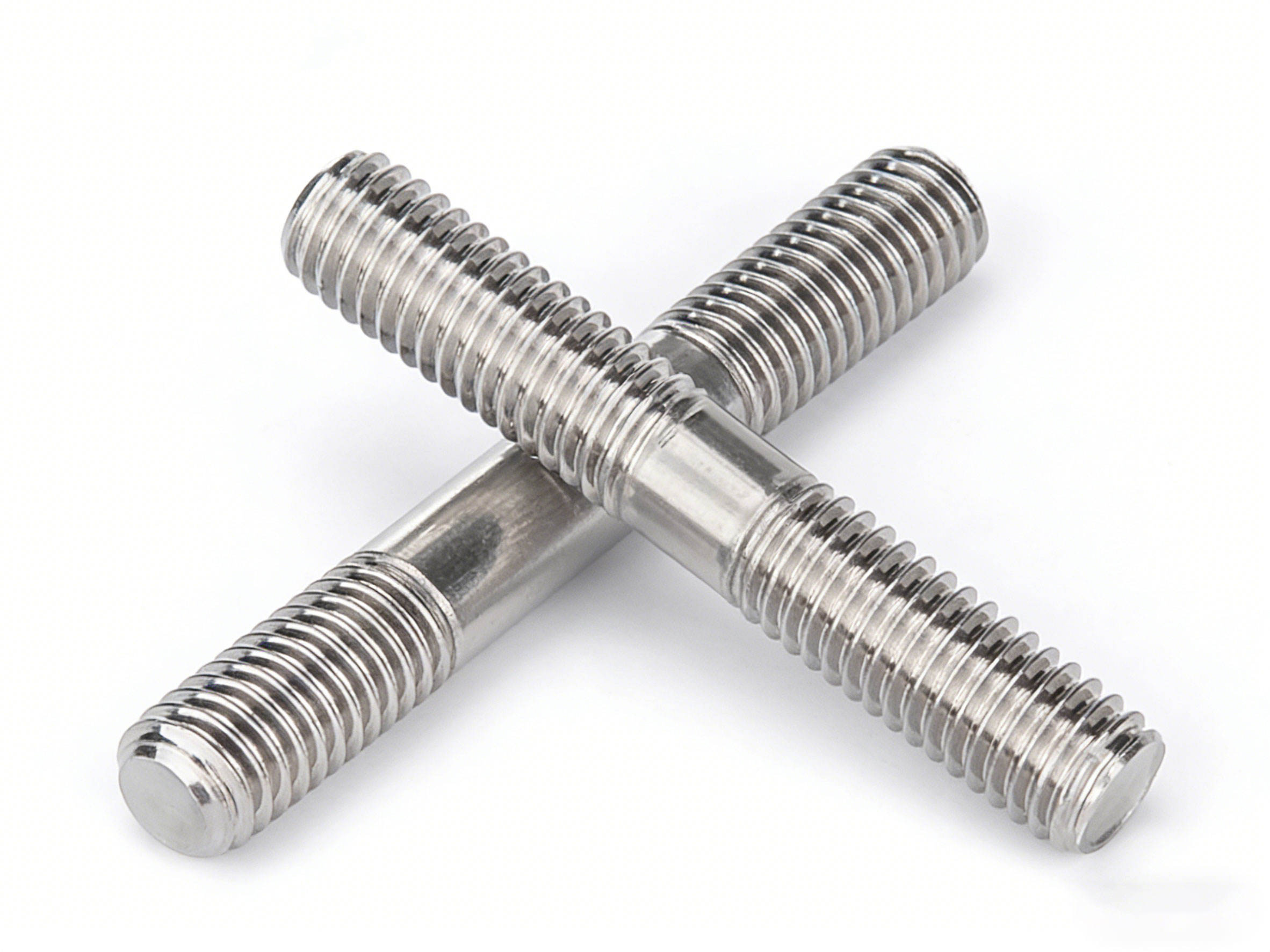
For precision threaded work on flanges and equipment where the thread runout and protrusion are controlled, we supply double-ended and tap-end studs to the drawing length; that is covered in our B7 threaded rods and double-ended studs guide.
6. A325 / A490 Structural Bolts: RCSC and the Slip-Critical Question
Where the structural steel meets the pipe rack, the bolt is an A325 or A490 (now F3125) high-strength structural bolt. These are heavy hex bolts, but they are installed to a procedure, not just run up with a wrench:
- Bearing-type connection. The bolt is tightened to the required preload and the joint carries load through bearing of the bolt on the hole. The faying surface can be painted or mill scale.
- Slip-critical connection. The joint carries load by friction between the faying surfaces. The faying surface has to be prepared — clean mill scale, blast-cleaned with a specified profile, or a Class A / Class B coating per RCSC — and the bolt has to be preloaded to the required tension. A bolt run up "snug tight" on a slip-critical joint does not deliver the clamp load the friction path depends on.
- Tightening method. Turn-of-nut, calibrated wrench, tension-indicator washers or direct-tension control, per the RCSC specification. The friction condition of the bolt and washer has to match the procedure.
The MENA project reality: structural steel on a refinery or petrochemical unit is often specified to AISC 360 design provisions and installed to the RCSC Specification for Structural Joints Using High-Strength Bolts. Where the project drawing calls up these standards, we supply the heavy hex A325 / A490 bolts with matched heavy hex nuts and hardened washers as a lot-controlled assembly, with the galvanized or zinc-flake coating condition stated on the certificate. Electroplated zinc is generally not permitted for F3125 Grade A490 bolts unless the project specifically allows it, for the same hydrogen-embrittlement reason as on 10.9 alloy-steel bolts; zinc flake or HDG is the route.
7. Nuts, Washers and the Friction Condition
A bolt order is not complete with the bolt alone. The nut grade and the washer set the joint behaviour:
- A307 bolts take a regular hex nut to ASME B18.2.2, Grade A or Grade 2, matched to the bolt.
- A325 / A490 structural bolts take a heavy hex nut, finished to match the bolt (plain for plain, HDG for HDG, zinc flake for zinc flake), and a hardened flat washer under the rotated element — washer selection and hardness matching are covered in our hardened washers for oil & gas flanges guide.
- A193 B7 flange bolts and studs take an A194 2H heavy hex nut (2HM for sour B7M), with a hardened flat washer under the nut.
The friction condition — the nut factor K — is set by the coating and the lubrication. A PTFE dry-film coated B7 set has a documented, low, stable K. A plain A307 bolt has a high, variable K. The torque table built for one condition does not transfer to the other. When you order a structural or flange bolt from us, the coating and the friction condition are stated on the quotation and the certificate, so the erector or turnaround crew uses the procedure that matches the delivered hardware. The full turn-up sequence — gasket seating, torque or tension pattern, and final verification to a documented bolt-up procedure — is covered in our ASME PCC-1 refinery turnaround flange bolting guide.
8. Documentation MENA Inspectors Expect
On MENA refinery and petrochemical projects — Aramco, ADNOC, SABIC-type operator specifications and EPC QA/QC regimes — the bolt pack has to be traceable before the bolts go into the joint:
- EN 10204 3.1 material certificate, per heat, with chemistry and mechanical properties
- For A325 / A490: tensile, yield and hardness within the specified bands; lot identification per F3125
- For B7 / B7M: hardness report per lot; 100% hardness on sour B7M / 2HM lots where specified
- Dimensional report: thread gauge fit (GO / NO-GO), head across-flats, length, thread length
- Coating report where coated (thickness, adhesion, salt-spray hours)
- Heat-number traceability from bar mill certificate to the box label
For operator-witnessed structural or critical flange lots — SGS, BV, TÜV, or the owner's QA — we hold the lot for witness testing before shipment. The heat number on the box label is what lets the inspector tie the bolts in a specific beam splice or flange back to the certificate during the audit.
9. Supplier Evaluation Card
Use this card when comparing hex bolt, heavy hex bolt and machine bolt suppliers for MENA refinery, petrochemical and structural work. The points below are what operator QA/QC and EPC procurement teams typically ask us to demonstrate on a pre-project qualification.
| Evaluation point | What to ask the supplier | Why it matters |
|---|---|---|
| Product form discipline | Do they ship regular hex, heavy hex and machine bolt to the correct ASME B18.2.1 series? | "Hex bolt" on the PO without the series invites substitution |
| Grade range | Can they cover A307, A325 / F3125, A490 / F3125 and A193 B7 from one source? | Mixed-source bolt and nut loses lot control |
| Matched nuts | Are heavy hex nuts (A194 2H / 2HM, structural nuts) supplied as matched sets? | A mismatched nut unloads the joint |
| Thread length control | Do they hold grip and thread length to the standard on structural bolts? | Threads in the shear plane cut allowable load |
| Structural qualification | Can they supply A325 / A490 to F3125 with RCSC-compatible documentation? | Slip-critical joints need a qualified assembly |
| Sour hardness control | Is B7M / 2HM held at ≤ 22 HRC with lot-by-lot readings? | Sour flanges fail inspection on hardness |
| Coating and friction | Is zinc flake / HDG / PTFE applied in-house with recorded friction? | The torque table depends on the measured nut factor |
| Hydrogen control | Is electroplated zinc avoided on high-strength grades? | 10.9 / A490-class bolts are hydrogen-sensitive |
| Certificate format | Are 3.1 certs in English, per heat, matching PO line items? | Inspectors stop the bolt-up if the pack does not match labels |
| Repeat lead time | What is the repeat lead time for a mid-turnaround call-off? | Turnarounds do not wait for production schedules |
10. RFQ Dimensions: What to Send for a Complete Quotation
Bolt RFQs come back with clarifying questions most often because only a nominal diameter and quantity are given. Send the following on the first request:
| RFQ field | Example | Notes |
|---|---|---|
| Product form | Regular hex, heavy hex, or machine bolt | Different head and thread-length standards |
| Standard | ASME B18.2.1; state heavy series if heavy hex | Drives across-flats and nut matching |
| Grade | A307 Grade A; A325 / F3125; A490; A193 B7 / B7M | State sour / H2S explicitly |
| Diameter and thread | 3/4"-10 UNC, or M20 x 2.5 | Pitch must match the nut |
| Length | 2-1/2" under head, or 100 mm | Measured per the standard (under head for bolts) |
| Nuts and washers | Heavy hex nut + hardened washer, or regular hex nut | Supplied as matched sets |
| Position / application | B16.5 flange, beam splice, equipment cover | Drives product form and grade |
| Coating / lubrication | Plain, zinc flake, HDG, PTFE dry film | Matches the torque-table nut factor |
| Faying surface (structural) | Bearing-type or slip-critical, per RCSC | Slip-critical needs preload and surface prep |
| Quantity | e.g. 48 pcs per flange circle | Bolts and nuts counted as sets |
| Certification | EN 10204 3.1; 3.2 with witness if required | Agreed before production |
Send these fields, attach the flange list or the structural bolt schedule, and we return matched bolt-nut-washer set quotations per position — with product form, grade, coating and documentation scope agreed before the first bolt is packed.
11. Common Field Mistakes
- Ordering "hex bolts" without the series. A regular hex bolt and a heavy hex bolt of the same diameter take different wrenches and different nuts. Name the series.
- Substituting A307 on a pressure flange. A307 Grade A is a 60 ksi carbon bolt; a B7 flange joint is a 125 ksi preloaded alloy joint. They are not interchangeable.
- Using a machine bolt on a structural splice. The partial thread puts the shear plane in the threads. Use a heavy hex structural bolt with the correct grip.
- Regular hex head on an equipment cover. The smaller head embeds into the flange face over time and relaxes the joint. Use the heavy hex form.
- Mixing bolt and nut sources. A heavy hex bolt with a regular hex nut is a mismatch the inspector flags. Ship the matched set.
- No friction condition stated. Torque on a dry, rusty bolt delivers a fraction of the intended preload. Record the coating or anti-seize batch.
- Electroplated zinc on A490 / high-strength. Hydrogen embrittlement risk. Use zinc flake with bake-out or HDG.
- Slip-critical joint run up snug-tight. The friction path needs full preload to the RCSC procedure. Snug-tight is for bearing-type.
- Changing coating mid-project. A different coating changes K. Reissue the torque table or keep the friction condition constant.
FAQ
Q: What is the actual difference between a hex bolt and a machine bolt? A: Both are threaded fasteners with a hex head that pass through a clearance hole and take a nut. The regular hex bolt (ASME B18.2.1) has a longer thread length and a standard head; the machine bolt (ASME B18.2.1) has a shorter, fixed partial thread and is intended for light equipment, guards and non-critical covers. For pressure flanges and structural splices, neither is the right form — use a heavy hex bolt or a stud.
Q: When should I use a heavy hex bolt instead of a regular hex bolt? A: On pressure flanges, equipment covers and high-strength structural joints. The larger across-flats spreads the bearing load under the head and nut, and it mates with a heavy hex nut. Regular hex bolts are for general, non-critical fastening where the clamp load is modest.
Q: Can I use A307 Grade A on a refinery flange? A: Only where the project spec explicitly permits it. Most refinery hydrocarbon service flanges are specified to A193 B7 / B7M studs with heavy hex nuts, or to A307 Grade B on lower-duty equipment. A307 Grade A is a general carbon bolt and is not the default for pressure-boundary service.
Q: What is the difference between A325 and A490 structural bolts? A: Both are high-strength heavy hex structural bolts installed to the RCSC specification. A325 (now F3125 Grade A325) is 120 ksi min tensile; A490 (F3125 Grade A490) is 150 ksi. The structural engineer selects the grade based on the connection design; do not substitute one for the other without approval.
Q: Do you supply the matching nuts and washers? A: Yes. Heavy hex bolts are supplied with heavy hex nuts (A194 2H / 2HM for flanges; structural nuts for A325 / A490) and hardened flat washers, as lot-matched sets with the grade and friction condition documented on the pack.
Q: What certificates come with a bolt order? A: EN 10204 3.1 per heat, with chemistry, mechanicals, hardness, thread-gauging records and coating thickness. 100% hardness on B7M sour lots where specified. 3.2 with SGS / TÜV witness is arranged where the operator requires it.
Request a Quotation
Send the flange list, the structural bolt schedule or the equipment cover drawing above, and we will return matched bolt-nut-washer set quotations per position — product form, grade, length, coating, friction condition and documentation scope — within one working day, timed to your turnaround or construction window.
Email: engineering@glfastener.com, WhatsApp: +86 166 6309 4647
We supply refinery and petrochemical bolting as complete, documented packages, with the product form and grade fixed at quotation so the delivered hardware matches the joint design rather than working against it.
Related guides: Oil & Gas Fastener Manufacturer & Stud Bolt Center, Heavy Hex Nuts & Coupling Nuts, B7 Threaded Rods & Double-Ended Studs, Hardened Washers for Oil & Gas Flanges, ASME PCC-1 Refinery Turnaround Flange Bolting