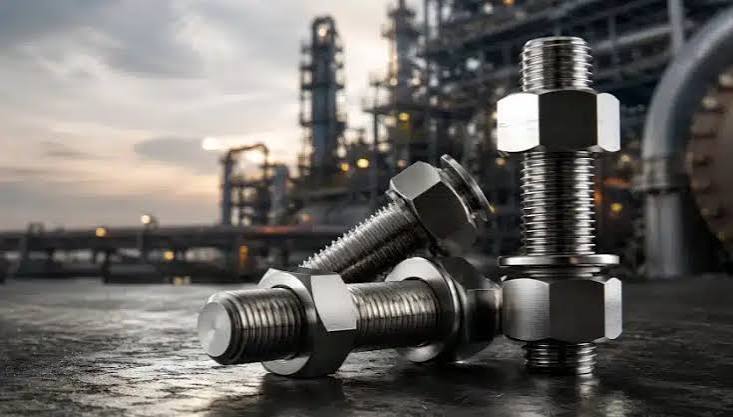
API 20E / 20F Bolting Requirements for Oil & Gas Projects: Complete Buyer's Guide
---
Introduction: Why "API Certified" Matters More Than a Logo
A drawing that calls out "API certified fasteners" is increasingly common on Middle East oil and gas projects. But the phrase is not a product grade. It refers to a certification system — API 20E for alloy and carbon steel bolting, API 20F for corrosion-resistant bolting — built on licensed manufacturers, audited quality systems, and documented traceability.
The value of an API-licensed supplier is not that their bolts are stronger. It is that the entire production chain — material selection, heat treatment, testing, traceability, and documentation — is audited against a published specification, and the manufacturer holds a license that can be verified online. For a project owner, that audit trail is the point.
---
Section 1: What API 20E and API 20F Actually Cover
- API 20E (Alloy and Carbon Steel Bolting for Use in the Petroleum and Natural Gas Industries) covers bolting materials such as B7, B7M, L7, L7M, B16, and stainless grades used in pressure-containing equipment and flanged joints. The current editions are the Second and Third Editions.
- API 20F (Corrosion-Resistant Bolting for Use in the Petroleum and Natural Gas Industries) covers corrosion-resistant alloy (CRA) bolting — duplex and super-duplex stainless steels (e.g., 2205, 2507), nickel alloys such as Alloy 718, Alloy 625, and Monel K-500, and other high-strength corrosion-resistant grades — for applications requiring controlled CRA bolting performance, including sour-service and subsea environments where specified.
Both standards define requirements across the full chain:
- Material selection and chemical composition control
- Manufacturing process control (forging, heat treatment, threading)
- Mechanical property verification (tensile, hardness, impact where applicable)
- Traceability from heat/lot to finished part
- Inspection and testing requirements, including third-party options
- Documentation requirements
Important note: API certification alone does not make a bolt fit for all sour service. Sour-service suitability still comes from the material and hardness requirements in NACE MR0175 / ISO 15156. API 20E/20F is the manufacturing and quality-assurance framework that proves the parts were made and controlled to a repeatable, audited standard.
Section 2: The API Monogram Program — How Licensing Works
API does not "certify individual bolts." It licenses manufacturers to apply the API Monogram to products that comply with the applicable API specification.
Key facts for buyers:
- The license is held by the manufacturer, not the product. A licensed factory can only Monogram the specific product categories in its license scope.
- The quality system is audited. API Monogram licensees operate under API's applicable quality management system requirements, including API Specification Q1 where applicable, and are subject to periodic API audits.
- Scope matters. A supplier may be licensed for API 20E but not API 20F, or for bolting but not valves. Always check the license scope, not just the logo.
- The license is verifiable online. API publishes the list of licensed manufacturers and their scopes on its website. A genuine supplier will give you its license number without hesitation.
What to ask for: the supplier's API license number and the exact product scope, then verify it against the API online registry before awarding the order.
Section 3: Bolting Specification Levels and Material Grades
API 20E and API 20F define Bolting Specification Levels (BSL) that set the rigor of manufacturing and quality controls. The higher the level, the more critical the service and the stricter the requirements:
- BSL-1 — standard bolting for general service, with specified material and mechanical requirements. BSL-1 exists only in API 20E.
- BSL-2 — bolting with enhanced control of material properties and manufacturing processes. This is the minimum level in API 20F.
- BSL-3 — bolting for critical service, adding supplemental requirements such as tighter material controls, 100% surface and volumetric NDE, and additional testing.
Common grades that may appear in API 20E-compliant bolting specifications include:
- B7 — chromium-molybdenum alloy steel, high strength, general high-temperature service.
- B7M — B7 material with controlled hardness (typically ≤ 22 HRC) for sour service per NACE MR0175.
- L7 / L7M — low-temperature alloy steel grades, L7M being the hardness-controlled version.
- B16 — higher-strength chromium-molybdenum vanadium steel for elevated temperature and higher pressure.
- Stainless grades — including 304, 316, and precipitation-hardened grades where corrosion resistance is the driver.
For sour-service projects, API 20E BSL-2 or BSL-3 with hardness-controlled grades (B7M, L7M) is the combination most operators specify, together with NACE MR0175 compliance for the material selection. For corrosion-resistant bolting in sour or subsea service, API 20F BSL-2 or BSL-3 is the applicable framework.
Section 4: What Documentation Proves Compliance
When you buy "API certified" bolting, the delivery package should allow your QA/QC team to close the file without chasing anything:
- API Monogram license number and product scope (from the manufacturer, verifiable on API's registry)
- Material test certificates — typically EN 10204 3.1 MTCs, showing chemical composition and mechanical test results per heat
- Heat number traceability from raw material to finished part, with lot codes marked on the parts or packaging
- Hardness and tensile test reports for the delivered lots
- Heat treatment records where required by the BSL
- Certificate of Conformance to the API specification and BSL called out on the order
A common gap: the supplier shows a Monogram license for one product line but ships bolting outside that scope. Check the license scope against the exact product and BSL on your purchase order.
Section 5: How to Verify a Supplier Before Ordering
A five-minute check before the PO prevents a six-week surprise at inspection:
- Ask for the API license number and the exact product/BSL scope.
- Check the number on the API licensed-manufacturer registry.
- Ask which BSL and material grades the order will be produced to, in writing.
- Ask for a sample MTC from a similar previous order, and check that heat numbers, test values, and traceability lines are complete.
- Confirm whether third-party inspection is acceptable and at which stage (mill, heat treatment, or final).
If the supplier hesitates on any of these, treat it as a red flag regardless of how professional the website looks.
Section 6: API Certification vs. NACE MR0175 — the Practical Relationship
The two requirements are often quoted together on Middle East projects, and buyers frequently confuse them:
- NACE MR0175 / ISO 15156 sets the material and hardness limits for sour service — for example, the 22 HRC hardness ceiling for carbon and low-alloy steels in defined H2S environments.
- API 20E/20F sets the manufacturing, testing, and traceability framework for bolting products.
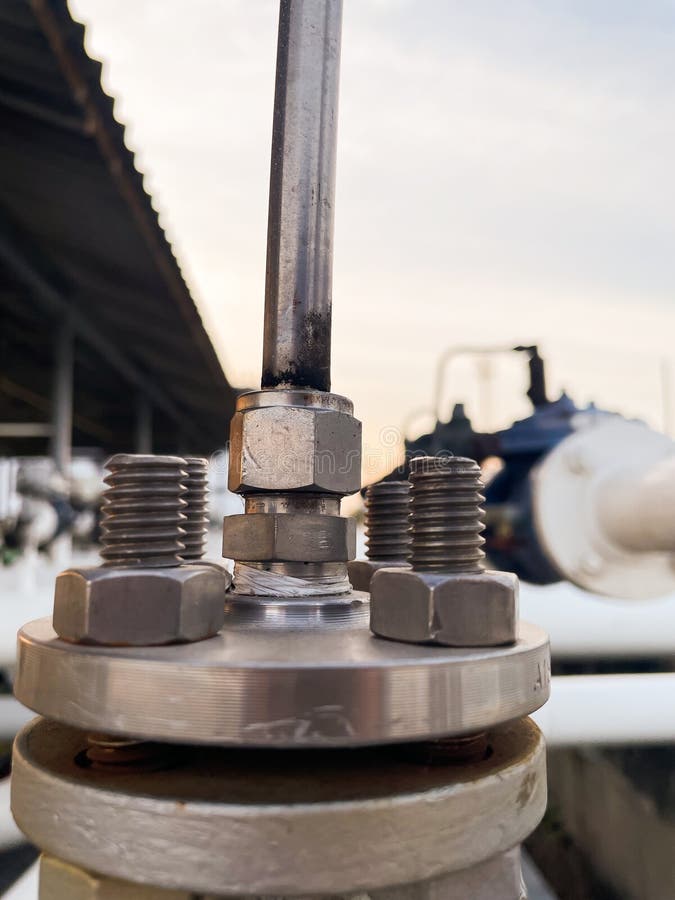
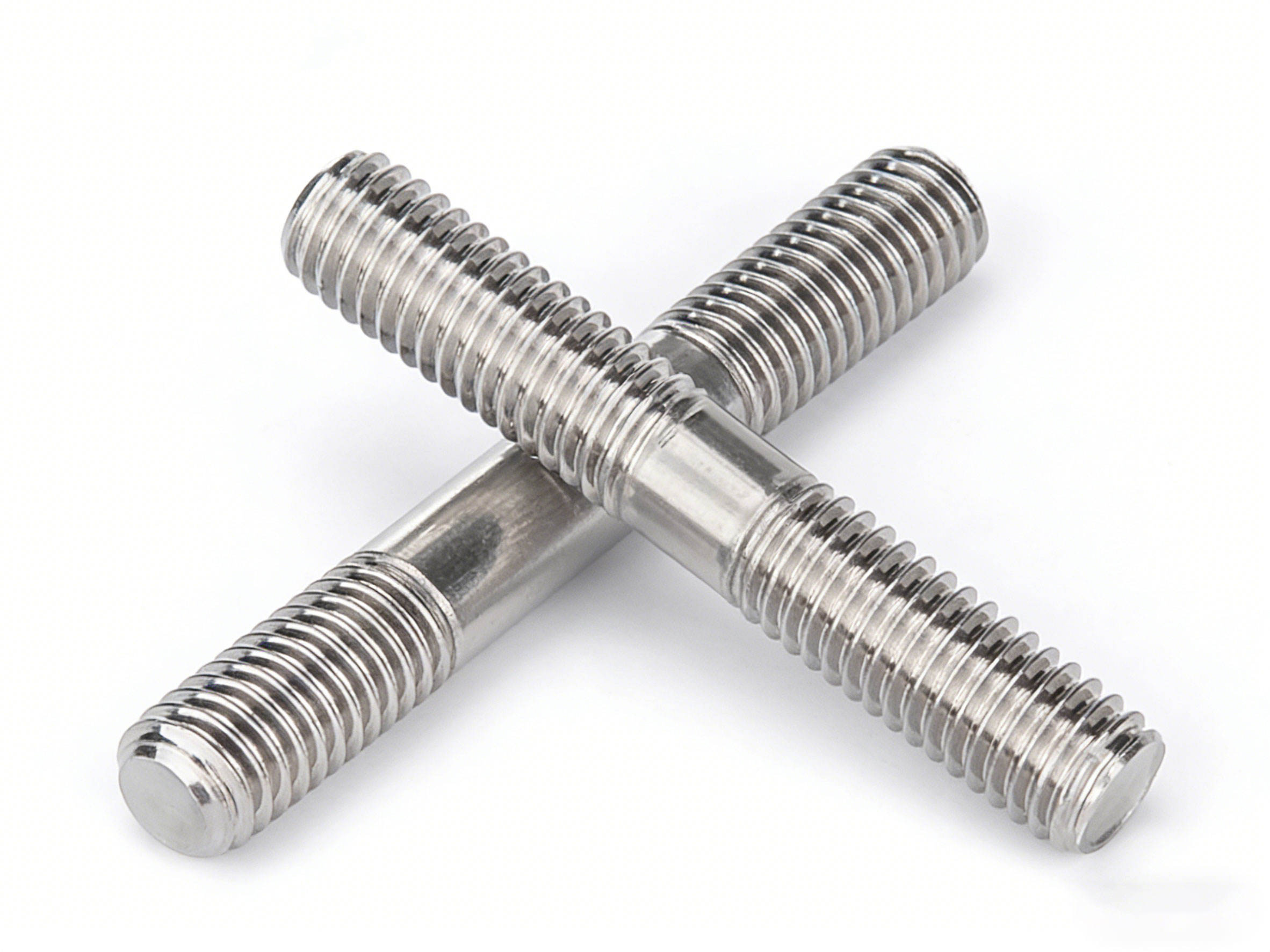
In practice, the project's material specification will call out both: an API 20E BSL-2 B7M stud, hardness ≤ 22 HRC, with full traceability and MTCs. The supplier must be able to produce parts that meet both the manufacturing framework and the hardness limits — and document both. Note that the exact BSL, class, and thread requirements (including UN thread forms such as 8UN for large-diameter flange studs per ASME B16.5 practice) should be confirmed from the project specification.
---
FAQ
Q1: Is "API certified" the same as "API approved"? There is no general "API approval" for a product. API licenses manufacturers under the Monogram program for specific product scopes. Ask for the license number and check the scope and BSL.
Q2: Can a non-licensed manufacturer still make good bolts? Yes, quality is possible without the license. But on projects where the specification requires API-certified bolting, the license is a contractual requirement, not a quality judgement. Confirm the requirement with your project owner before substituting.
Q3: Does API 20E replace NACE MR0175? No. They cover different things: manufacturing framework versus material suitability for sour service. Most sour-service projects require both.
Q4: What is the difference between BSL-1 and BSL-3 bolting? The BSL (Bolting Specification Level) defines the level of control and testing. BSL-1 is standard, BSL-2 adds enhanced material/process control, BSL-3 adds supplemental critical-service requirements including 100% NDE. Your engineering spec will state the BSL; do not let the supplier "upgrade or downgrade" it silently. Note that API 20F starts at BSL-2.
Q5: How do I check if a supplier really holds the license? Use the license number they provide and look it up in API's published registry of licensed manufacturers. The scope shown must include the product and BSL you are buying.
Q6: Do I need separate documents for API compliance and for NACE? Yes. NACE compliance is demonstrated through material selection, hardness test data, and the MTC; API compliance is demonstrated through the license, conformance to the BSL requirements, and traceability documentation. Both belong in the delivery package.
---
Need API 20E/20F bolting for your project? Send us your specification with the BSL and material grades, and we will confirm license scope, lead time, and the documentation package within one working day. Full API Monogram traceability and third-party inspection (e.g., SGS/TÜV) coordination are handled as standard for our Middle East oil and gas clients.
Why Source Your Bolting from Gangluo
Gangluo is a China-based fastener manufacturer supplying hardened and alloy-steel bolting to EPC contractors, valve OEMs and national oil companies across the Middle East, Europe and Southeast Asia. Our production is certified to ISO 9001, and every lot is heat-number traceable from incoming bar stock to finished stud, with EN 10204 3.1 inspection certificates — and 3.2 where the project requires — issued before dispatch rather than after an audit request.
We hold stock of common B7 / B7M studs and 2H / 2HM nuts for short-lead orders, and run cold heading, machining, heat treatment and in-house hardness and mechanical testing lines for project-sized quantities. Flexible MOQ, third-party inspection coordination (SGS, BV, TUV) and consolidated container shipment to Jebel Ali, Dammam or Hamad are available on request.