Heavy Hex Nuts Manufacturer: Grade Matching & Specification Guide for Stud Bolts & Flange Bolts
When a flange joint leaks during hydrotest, the investigation starts with the bolting — and more often than not, the nut grade was never verified against the stud bolt. Gangluo manufactures heavy hex nuts for stud bolts, flange bolts and structural bolting in oil & gas and industrial service, with grade matching against the bolt, proof-load verification and certification that supports project inspection.
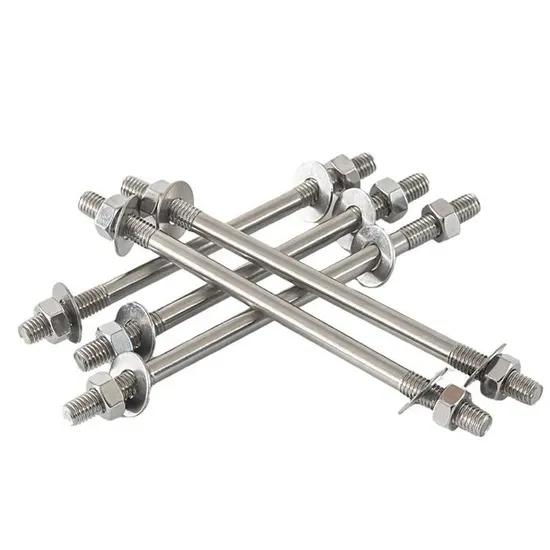
Heavy hex nuts are not specified independently — they are part of a complete bolting assembly with studs, washers and flange design requirements, covered in our MENA oil & gas stud bolt and flange bolting specifications guide. Based on our QA/QC inspection records, flange bolting acceptance usually hinges on four practical details: nut grade matching, proof load verification, hardness control and certificate completeness.
What Is a Heavy Hex Nut?
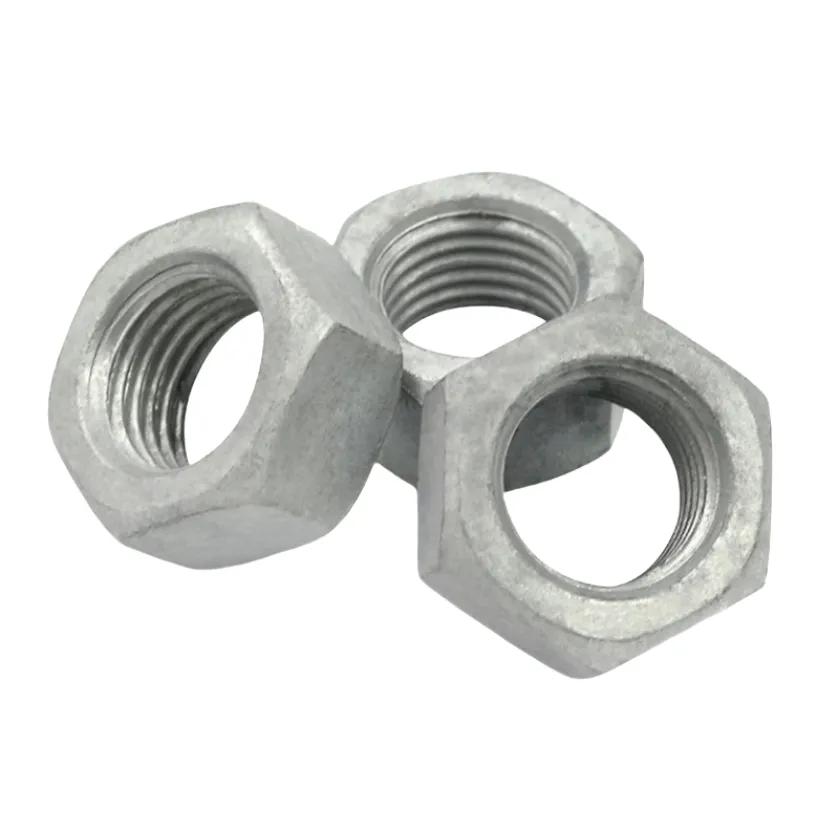
A heavy hex nut is a hexagon nut with a larger width across flats and thicker body than a standard hex nut, giving greater bearing area and higher load capacity. Heavy hex nuts are the standard nut for stud bolts and flange bolting in pressure-containing connections, because the larger bearing face distributes the bolt load across the flange and reduces the risk of crushing or deformation under preload.
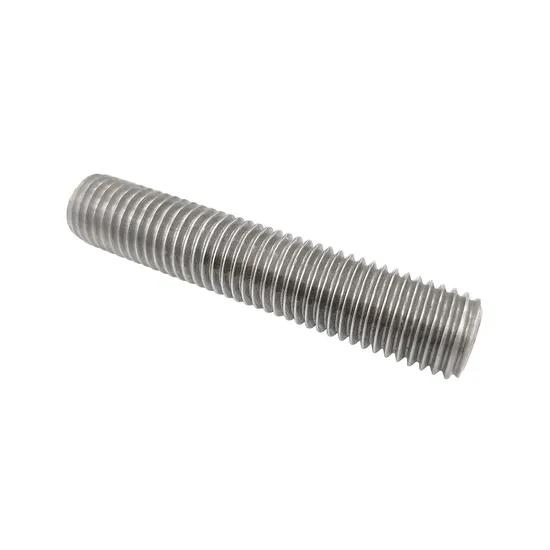
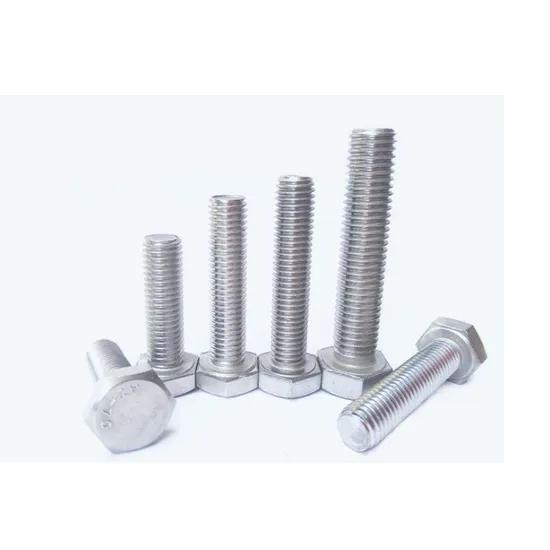
Heavy hex nuts for oil & gas bolting are manufactured to material and dimensional requirements commonly referenced in international project specifications — ISO 4033 / BS 4190 (metric) or ASME B18.2.2 (imperial) dimensions, alongside ASTM A194 / A194M material grades — the globally referenced systems for pressure-containing service, with property classes matched to the bolting design. Common sizes for flange bolting range from M12 to M64 (5/8" to 2-1/2" where imperial flange bolting is specified), with sizes M16–M36 covering most piping classes. The nut is dimensioned to match the bolt — the same thread size and pitch — while its grade is selected to match the bolt's property class.
| Thread size | Width across flats | Nut thickness (typical) | Min. proof load (approx.) |
|---|---|---|---|
| M16 (5/8") | 27 mm (1-1/16") | 14 mm | ~100 kN |
| M20 (3/4") | 32 mm (1-1/4") | 16 mm | ~156 kN |
| M24 (7/8") | 36 mm (1-7/16") | 19 mm | ~225 kN |
| M30 (1-1/8") | 46 mm (1-13/16") | 24 mm | ~350 kN |
| M36 (1-3/8") | 55 mm (2-3/16") | 29 mm | ~510 kN |
Grade Matching: The Nut Must Not Fail Before the Bolt
The nut must never be the failure point of the assembly: if an overload occurs, the bolt should fail first, never the nut. We enforce this by matching the nut's proof load to the bolt's tensile requirement on every order.
For flange bolting in oil & gas service, the common grade combinations are:
| Bolt | Typical matching nut | Proof load (typical) | Max service temp | Typical application |
|---|---|---|---|---|
| Alloy steel stud bolt, class B7 / 8.8 / L7 | 2H (heavy hex) | ~1200 MPa | ~450 °C | General hydrocarbon service |
| Sour-service alloy stud bolt (NACE MR0175 / ISO 15156) | 2HM (hardness-controlled 2H) | ~1030 MPa | ~450 °C | H2S service, hardness \u2264 22 HRC / 237 HBW |
| Stainless stud bolt, A4-80 / B8M class | 8 / 8M (stainless) | ~760 MPa | ~590 °C | Corrosive and high-temperature service |
| High-strength bolt, property class 10.9 | Class 10 nut or equivalent | ~1040 MPa | per bolt class | Structural and high-load connections |
📄 Technical Procurement Support: need to verify nut grade, proof load and hardness requirements before issuing an RFQ? Download the Gangluo heavy hex nut grade-matching and inspection checklist.
Common nut selection mistakes in oil & gas RFQs: many RFQs specify the stud bolt grade but omit the matching nut requirement — for example, a B7 stud requires a compatible nut grade such as 2H, or 2HM where sour service applies. Missing this information delays technical approval and can stop the order at inspection. State the nut grade together with the bolt, and the certificate scope, and the review is complete the first time.
The nut grade is verified by proof load, hardness and, where specified, chemical composition. A hardened 2H-class heavy hex nut is proof-load tested to the applicable bolting standard, typically verifying a proof stress around 1040 MPa for the common flange bolt sizes (equivalent to property class 10 under ISO 898-2), with hardness in the range of HRC 24–35. For sour service, the hardness limit applies to the nut as well as the bolt — a 2HM nut is manufactured with controlled hardness so the complete bolting set complies.
Heavy Hex Nut Specification: What the Buyer Should State
A complete nut order for flange bolting specifies:
- Type and size: heavy hex nut, thread size and pitch matching the bolt (e.g. M20 x 2.5)
- Grade and style: e.g. 2H heavy hex, style 2 (dimension series per the applicable standard); for sour service, 2HM
- Hardness requirement: where sour service applies, maximum hardness per ISO 15156 / NACE MR0175 (typically \u2264 22 HRC / 237 HBW for carbon and alloy steel nuts)
- Coating: plain (as-rolled or heat-treated), or coated per the bolt specification — common oil & gas coatings include PTFE / Xylan dry-film lubricant, zinc flake (Geomet / Dacromet type) and hot-dip galvanizing. For HDG bolting, nuts are over-tapped (typically +0.4 mm thread allowance) to assemble over the coated thread
- Marking: grade identification (e.g. "2H" or "2HM") and manufacturer’s mark stamped on one face, as required for field traceability
- Certification: EN 10204 3.1 material certificate, proof-load test report and hardness report
The error we see most in nut orders is a size and "heavy hex" with no grade. Without a grade there is no proof load, no hardness limit and no way to confirm sour-service compliance — the grade must be stated on the order.
Sour Service and Hardness Control
In H2S service, nuts made from carbon or low-alloy steel are subject to the same sulfide stress cracking (SSC) controls as the bolts — see our Sour Service Fasteners guide for the full material and hardness framework. Under ISO 15156 / NACE MR0175:
- The maximum hardness for carbon and low-alloy steel nuts is typically 22 HRC (237 HBW)
- Nuts are hardened and tempered, with the hardness verified on every lot
- 2HM is the sour-service version of 2H — same grade family, with the hardness limit enforced and documented
Where a project specifies both sour service and elevated temperature, the nut material selection must be confirmed against the applicable limits — see our High Temperature High Pressure Bolting guide — and the bolt-to-nut combination reviewed as a set.
Stainless Nuts and Corrosion Considerations
For stainless stud bolts (A4-80 or equivalent), covered in our 316 Stainless Steel Flange Bolts guide, the matching nut is a stainless nut in a compatible class. The nut should be from the same material family as the bolt to avoid galvanic mismatch, and hardness should be controlled to prevent galling during assembly.
For bolting in chloride or seawater service, stainless nuts are used uncoated, with an anti-seize compound applied at assembly. Note that nut hardness in stainless grades is generally higher than in carbon steel grades — the NACE sour-service hardness limits apply to carbon and alloy steels, while austenitic stainless nuts are evaluated by cold-work level and hardness per the standard.
Heavy Hex Nut Documentation Package
Every Gangluo nut order is supported by a documentation package that matches the commercial offer:
- EN 10204 3.1 material certificate (chemical composition, mechanical properties)
- Proof-load test report
- Hardness report (with readings per lot)
- Dimensional inspection report
- Coating report where coated nuts are supplied
This is the package our customers submit with their QA/QC inspection files, and it is agreed at quotation so there are no surprises at delivery.
Quality Control at Gangluo
Gangluo produces heavy hex nuts on a controlled line:
- Material control — carbon, alloy and stainless steel bar from certified mills, with material certificates verified on receipt and heat numbers recorded before forming
- Forming — cold heading or forging, followed by hardening and tempering where the grade requires
- Hardness and proof load — hardness testing on every production lot (full coverage on sour-service 2HM lots, sampling on standard 2H), using calibrated hardness testers; proof load is verified per the applicable standard, with the test report included in the certificate package
- Thread control — internal threads gauged with calibrated thread gauges; for HDG nuts, over-tapping is controlled so the nut assembles over the coated bolt thread
- Traceability — heat number and lot traceability from bar to finished batch, supported by EN 10204 3.1 certificates from our in-house testing laboratory
A recent example: 45,000 pieces of M24 2HM heavy hex nuts supplied for a sour-service pipeline project, with lot-by-lot hardness testing at ≤ 22 HRC and the readings included on every 3.1 certificate.
All nuts are supplied with documentation that matches the commercial offer, so the delivered certificate package supports project inspection and QA/QC acceptance.
Why Gangluo for Heavy Hex Nuts
- Oil & gas focus — heavy hex nuts supplied for stud bolt assemblies on GCC and MENA projects aligning with Saudi Aramco or ADNOC general engineering requirements, referencing NACE MR0175 / ISO 15156, API 20E/20F and EN 10204 certification requirements
- Controlled sour-service line — 2HM nuts produced with 100% hardness testing at \u2264 22 HRC, with readings recorded on the certificate
- Documentation that matches the offer — grade, proof load and hardness scope agreed at quotation, so the delivered certificate package supports project inspection
- Proven supply — recent orders include 45,000 pieces of M24 2HM for a sour-service pipeline project and full nut sets for flange bolting packages across MENA
Sourcing and Lead Times
- Common sizes (M12–M36, 2H / 2HM) are available for dispatch from stock or short production runs, typically 2–3 weeks
- Project-specific sizes, special grades and coated nuts are manufactured to order, typically 3–4 weeks
- Quotations include the grade, proof-load scope and certification, so the commercial offer matches the delivered documentation
Assembly: Torque and K-Factor
For installation, the nut’s thread condition and coating determine the torque–preload relationship. Coated nuts (PTFE / Xylan or zinc flake) give a lower and more stable K-factor than plain nuts, which is why the tightening torque in the project procedure should be based on the actual coating and lubricant, not on a generic value. Our certificate package includes the thread condition and coating type so the installation team can apply the correct torque.
FAQ
Q: What is the difference between a heavy hex nut and a standard hex nut?
A: A heavy hex nut has a larger width across flats and a thicker body than a standard hex nut, giving a larger bearing area and higher load capacity. It is the standard nut for stud bolts and flange bolting, where the bearing face must distribute the bolt load across the flange.
Q: What does 2H mean in a nut grade?
A: 2H is a hardened and tempered carbon or alloy steel nut grade used with high-strength bolts and stud bolts. The "H" indicates hardened — the nut is heat-treated to achieve the required proof load and hardness. 2HM is the sour-service version with a controlled hardness limit.
Q: Can I use a standard hex nut on a stud bolt?
A: Flange bolting standards specify heavy hex nuts for stud bolt assemblies. A standard hex nut may have insufficient bearing area and proof load for pressure-containing flange connections. Use the nut style specified by the flange or bolting standard.
Q: What hardness limit applies in sour service?
A: Most of the sour-service inquiries we receive reference ISO 15156 / NACE MR0175, which caps carbon and low-alloy steel nuts at 22 HRC (237 HBW). We manufacture 2HM nuts to this limit and include the hardness readings on every 3.1 certificate.
Q: Should the nut be harder or softer than the bolt?
A: The nut should be matched to the bolt so its proof load is at least equal to the bolt's tensile requirement. In practice the nut is often slightly harder than the bolt material so thread deformation under load occurs on the bolt, which is easier to inspect. The critical requirement is that the assembly meets the specified proof load.
Q: What certificates do you provide?
A: EN 10204 3.1 material certificates with chemical composition, mechanical properties, hardness and proof-load test results, prepared from our in-house testing laboratory. 3.2 certificates with third-party witness are available where the project requires.
Q: What is the minimum order quantity?
A: Common sizes start from about 5,000–20,000 pieces depending on size and grade, with project-specific sizes quoted by requirement. Send the specification and our team will confirm the MOQ and lead time within one working day.
Get your heavy hex nut quote within one working day — simply reply with:
- Size & thread pitch (e.g. M24 x 3)
- Grade & coating (e.g. 2HM, PTFE)
- Quantity & certificate scope (e.g. EN 10204 3.1)
WhatsApp engineering support: send the BOM or project inquiry directly to our team.
📄 Download the nut specification checklist — size, grade, hardness, proof load and certification requirements.
📦 Request sample kits — evaluate thread fit, bearing face and hardness documentation before ordering.
💬 WhatsApp engineering support — send the BOM or project inquiry directly to our team.
Related guides: Sour Service Fasteners (NACE MR0175 / ISO 15156) · 316 Stainless Steel Flange Bolts · High Temperature High Pressure Bolting · Duplex & Super Duplex Fasteners (2205 / 2507) · Oil & Gas Fasteners Manufacturer