Monel K500 Fasteners Manufacturer: Nickel Alloy Bolts, Studs & Nuts for Oil & Gas
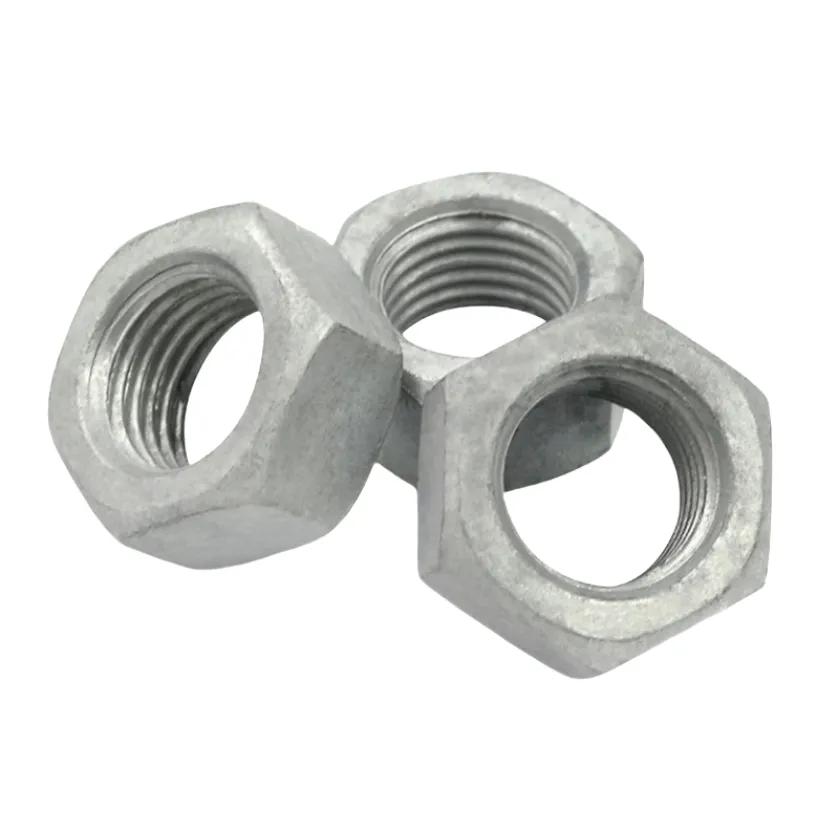
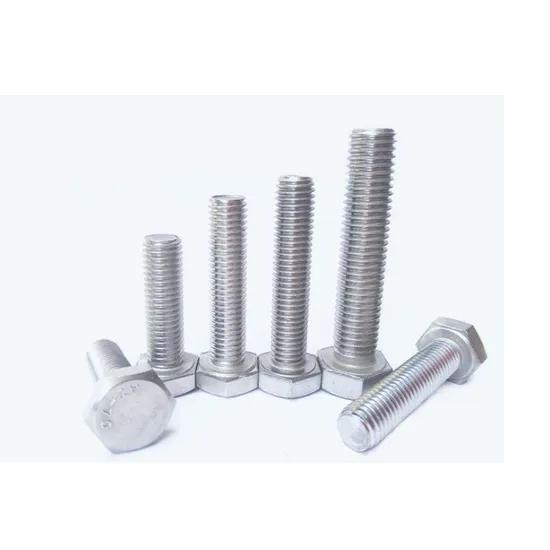
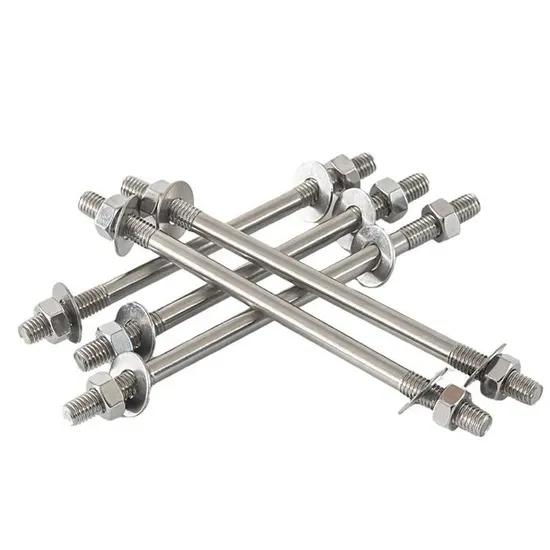
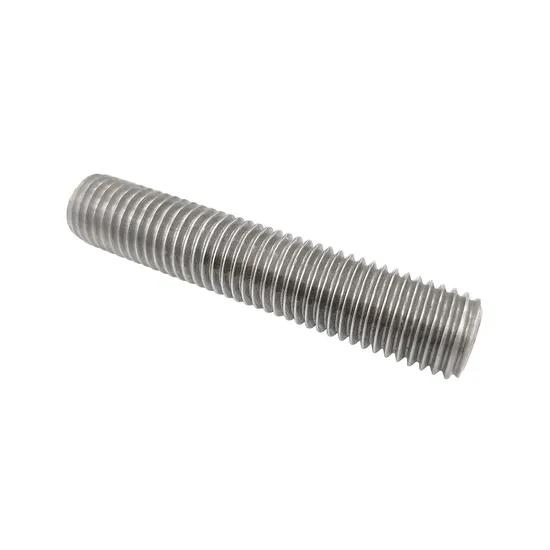
When chloride stress corrosion resistance and higher mechanical strength are required beyond 316 stainless steel capability, Monel K500 is the material often specified for gas lift manifold, wellhead and subsea bolting. Gangluo manufactures Monel K500 fasteners — stud bolts, hex bolts and heavy hex nuts — for oil & gas, subsea and chemical service, with age-hardening, NACE hardness control and certification that supports project review.
Gangluo — Monel K500 Fasteners Quick Reference:
- Material: Monel K500 (UNS N05500), age-hardenable nickel-copper alloy
- Products: stud bolts, hex bolts, heavy hex nuts, washers for stud bolt assemblies
- Applications: gas lift manifolds, wellhead and valve bolting, pump shafts, subsea components, HF and chloride service
- Property class: material per ASTM B865 (UNS N05500), age-hardened (H condition); sour-service limits per ISO 15156-3 / NACE MR0175
- Hardness control: ≤ 35 HRC per NACE MR0175 / ISO 15156-3 for sour service
- Certification: EN 10204 3.1 (3.2 with witness available)
In practice, K500 orders are decided on three points during technical review: whether the material class fits the service, whether the age-hardened hardness meets the sour-service limit, and whether the certificate package matches the project file. This guide focuses on those three approval points, with the material comparison and inspection details that decide acceptance.
What Is Monel K500?
Monel K500 is an age-hardenable nickel-copper alloy (UNS N05500) combining the corrosion resistance of alloy 400 with roughly twice the yield strength after heat treatment. The precipitation hardening is achieved through controlled additions of aluminium (2.3–3.5%) and titanium (0.35–0.85%), which form age-hardening phases during heat treatment.
Because it hardens by heat treatment rather than cold work, K500 delivers a combination that few fastener materials match: high strength (yield up to about 790–1,000 MPa in the age-hardened condition), excellent seawater and chloride resistance, and resistance to H2S and hydrofluoric acid. It is the default choice for bolting in gas lift, wellhead, valve and pump applications where stainless steels crack and duplex grades are not strong enough.
Typical composition (nominal, %):
| Element | Ni | Cu | Al | Ti | Fe | Mn | C |
|---|---|---|---|---|---|---|---|
| K500 (UNS N05500) | 63.0 min | 27.0–33.0 | 2.3–3.5 | 0.35–0.85 | 2.0 max | 1.5 max | 0.25 max |
K500 vs Alloy 400 vs 316 vs Duplex: When to Move Up
In Gangluo’s material selection system, Monel K500 represents the nickel-copper alloy solution for applications where 316 stainless steel lacks chloride SCC resistance and duplex alloys cannot provide the required combination of strength and seawater resistance. The material ladder in oil & gas bolting climbs from carbon steel to stainless, then to duplex, then to nickel alloys, and K500 sits at the top of the nickel-copper family:
| Service condition | Typical bolting | Why it is selected |
|---|---|---|
| Sour carbon steel service (up to limits) | B7 / 2H, or L7M / 2HM | Standard wellhead and flange bolting, hardness-limited |
| Chloride service, seawater, moderate H2S | 316 / A4-80 | Good general corrosion resistance, limited SCC resistance |
| Sour + chloride, high strength needed | 2205 / 2507 duplex | High strength, SCC resistance, cost-effective |
| Gas lift, HF acid, subsea, severe chloride | Monel K500 | Highest strength of the family, resistant to H2S and HF, high resistance to SCC in seawater |
| Extreme H2S + high temperature | Alloy 718 (age-hardened) | Higher temperature capability than K500 |
For the material below K500 on this ladder, see our MENA duplex and super duplex fasteners guide and our 316 stainless steel flange bolts for oil & gas. Where elevated temperature or extreme sour service pushes beyond K500, the High Temperature High Pressure Bolting guide covers Inconel 718 and alloy steel options. For sour-service hardness control across all bolting grades, refer to our Sour Service Fasteners (NACE MR0175 / ISO 15156) guide.
Sour Service and Hardness Control
In sour service, the acceptance criterion for K500 fasteners is hardness, not strength alone. NACE MR0175 / ISO 15156-3 limits K500 to a maximum hardness of 35 HRC for sour environments; above this, sulfide stress cracking resistance is not assured. Every Gangluo K500 fastener for sour service is age-hardened to a controlled hardness window, verified by hardness testing on every lot, with readings recorded in the certificate.
The same rule applies to the matching nut: K500 nuts in the same material family, hardness-controlled to the same limit, so the assembly passes inspection as a set. Never pair a K500 stud with a non-matching nut — the hardness and SCC review covers the full bolting set.
Mechanical Properties and Grade Matching
K500 fasteners are supplied age-hardened (H condition). The age-hardening cycle is heat-treatment controlled; the final mechanical properties depend on section size, so the bolt diameter and the heat-treat batch are documented together.
Typical mechanical properties (age-hardened, bar and fastener form, indicative values; ASTM B865 is referenced in international project specifications as the common material standard for K500 bar and fasteners):
| Property | Typical value |
|---|---|
| Tensile strength | 1,000–1,100 MPa |
| Yield strength (0.2%) | 790–1,000 MPa (diameter- and condition-dependent; confirm per certificate) |
| Hardness (sour service) | ≤ 35 HRC per NACE MR0175 / ISO 15156-3 |
| Density | 8.44–8.47 g/cm³ |
The nut grade is matched to the bolt: for K500 studs, the nut is also K500, manufactured and hardened in the same batch philosophy, with proof-load verification included in the test report.
Manufacturing and Quality Control at Gangluo
Gangluo produces Monel K500 fasteners on a controlled line:
- Material control — K500 bar stock from certified mills, with heat numbers recorded and PMI verification on receipt, confirming the nickel and copper balance before processing
- Age hardening — heat treatment to the age-hardened condition with furnace records per batch, and hardness verified on every lot
- Thread rolling — threads rolled (not cut) to maintain grain flow and fatigue resistance; thread fit verified with calibrated ring/plug gauges
- Sour-service hardness — full hardness coverage on sour-service lots, with the 35 HRC limit enforced and documented
- Traceability — heat number and lot traceability from raw bar to finished batch, supported by EN 10204 3.1 certificates; 3.2 with third-party witness available where the project requires
Common Specification Mistakes in K500 RFQs
Most K500 order delays trace back to three omissions in the RFQ:
- No hardness condition stated — "Monel K500 bolts" alone does not tell the mill whether the part is for sour service. State the hardness limit (e.g. ≤ 35 HRC) and the applicable standard (NACE MR0175 / ISO 15156-3) in the RFQ.
- No certificate scope — a 3.1 certificate covers the batch; some projects require 3.2 with witness. Agree this at quotation, not at delivery.
- No nut requirement — specifying only the stud leaves the matching nut grade open. Specify the full bolting set: stud + nut + washer, same material family.
State the grade, hardness limit, certificate scope and the full bolting set, and technical approval is complete the first time.
MENA Oil & Gas Focus
Gangluo supplies Monel K500 fasteners for GCC and MENA oil & gas projects, including wellhead and gas lift applications aligned with Saudi Aramco SAMSS and ADNOC engineering requirements. Our K500 production line is optimized for sour-service hardness control per NACE MR0175 / ISO 15156-3, with full documentation support for project QA/QC inspection.
When sending a K500 RFQ, include the size and thread pitch, the required condition (age-hardened) and hardness limit, the certificate scope (3.1 or 3.2), and the project standard references — our engineering team confirms specification compliance and delivery within one working day.
FAQ
Q: Can Monel K500 fasteners be used in sour service?
A: Yes, within the limits of NACE MR0175 / ISO 15156-3, which restrict K500 to a maximum hardness of 35 HRC. Hardness-controlled, age-hardened K500 is a standard selection for wellhead and gas lift bolting in sour environments.
Q: What is the difference between Monel 400 and Monel K500?
A: Alloy 400 is cold-work hardened and limited to about 480–760 MPa yield depending on condition; K500 is age-hardened to roughly double the yield strength, which is why it is specified where strength and corrosion resistance are both required.
Q: What certificates do you provide?
A: EN 10204 3.1 material certificates with chemical composition, mechanical properties and hardness readings, prepared from our in-house testing laboratory. 3.2 certificates with third-party witness are available where the project requires.
Q: What is the minimum order quantity?
A: Common sizes start from about 1,000–5,000 pieces depending on size and grade, with project-specific sizes quoted by requirement. Send the specification and our team will confirm the MOQ and lead time within one working day.
Get your Monel K500 quote within one working day — simply reply with:
- Size & thread pitch (e.g. M24 x 3 or 1-1/2" - 8UN)
- Grade & condition (e.g. K500 age-hardened, hardness ≤ 35 HRC)
- Quantity & certificate scope (e.g. EN 10204 3.1 / 3.2)
Download the K500 specification checklist — material, hardness, heat treatment and certification requirements.
Request sample kits — evaluate age-hardening quality and hardness documentation before ordering.
WhatsApp engineering support [+86 XXX XXXX XXXX] — send the BOM or project inquiry directly to our MENA project team.
Related guides: Sour Service Fasteners (NACE MR0175 / ISO 15156) · High Temperature High Pressure Bolting · Duplex & Super Duplex Fasteners (2205 / 2507) · 316 Stainless Steel Flange Bolts · Oil & Gas Fasteners Manufacturer