1. Why 2507 Exists: The Gap Between 2205 and Nickel Alloys
Most flange bolting schedules on a Middle East EPC project start with one of three default choices: ASTM A193 B7 alloy steel, A320 L7 low-temperature steel, or 316/A4 stainless. Each covers a band of the operating envelope. Once seawater, produced water, chlorides or sour gas enter the picture, that envelope narrows fast.
Duplex 2205 (UNS S32205) was the first upgrade most owners accepted. It is strong, reasonably priced, and listed in NACE MR0175 / ISO 15156 for defined sour environments. But as projects moved into deeper reservoirs, longer subsea tiebacks, hotter HP/HT wells and coastal desalination trains, 2205 ran into three ceilings:
- Pitting and crevice corrosion at higher chloride temperatures
- Chloride stress-corrosion cracking margin above roughly 60–80 °C
- Lower yield strength than needed for high-pressure flanges where bolt load governs
Super duplex 2507 (UNS S32750, and the closely related S32760) pushes all three limits further. It raises chromium to ~25%, adds nickel and nitrogen, and lands in a PREN band around 42–45 — above 2205 and close to nickel alloys like 625, at a fraction of the price per kilogram.
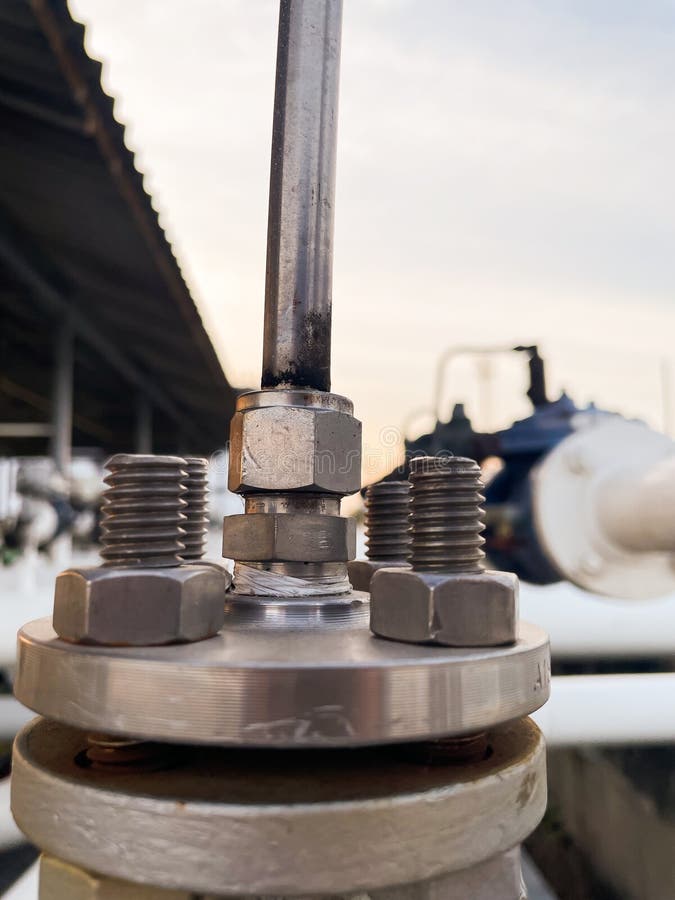
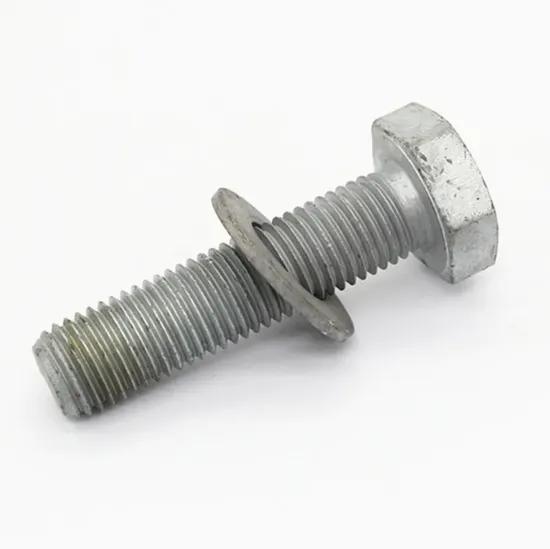
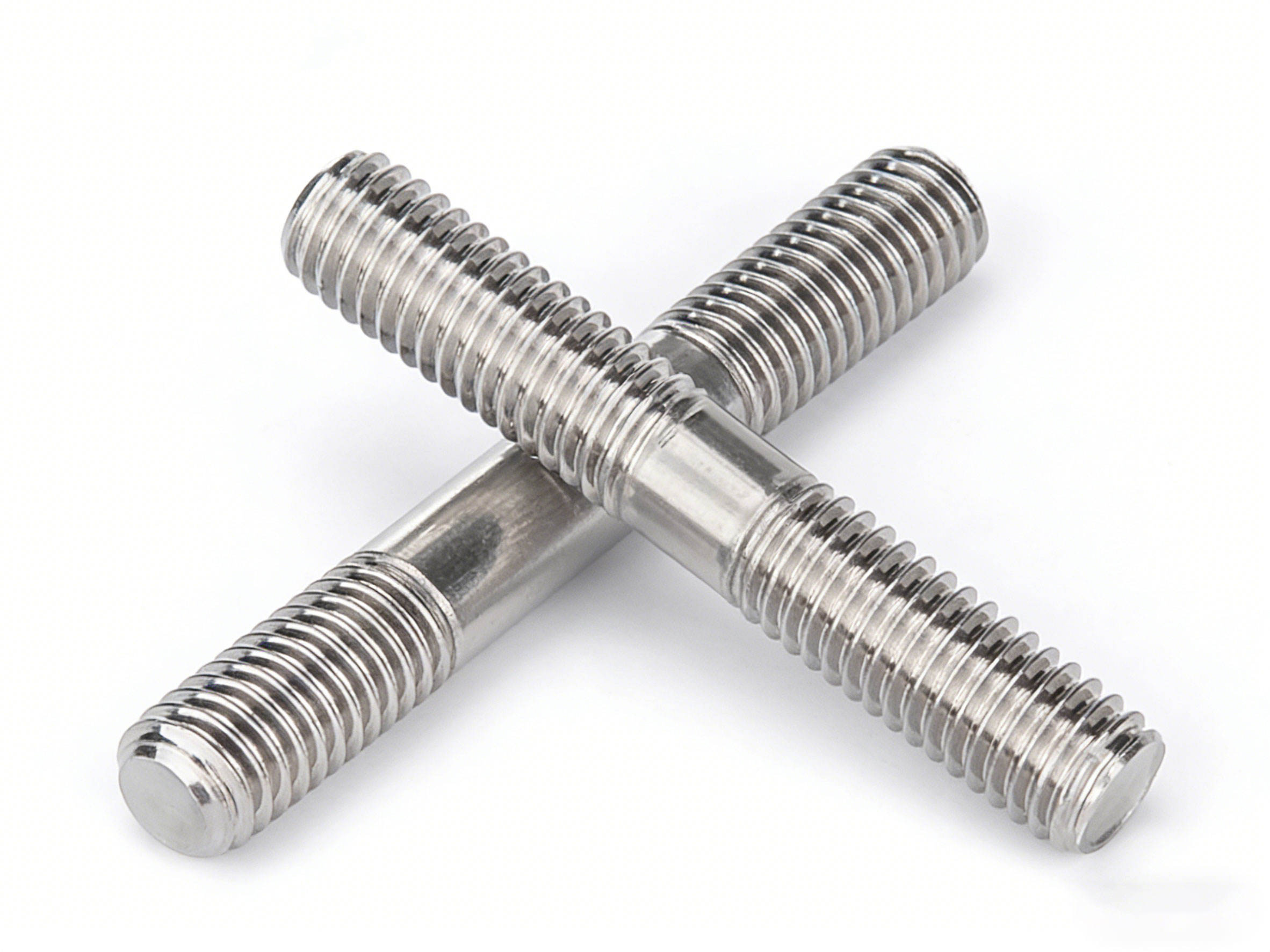
Gangluo supplies 2507 studs, heavy hex bolts, nuts and washers for refinery, offshore, seawater injection and desalination flange packages across the MENA region. This article is written for materials engineers, EPC procurement teams and QC inspectors who have to specify, buy and accept 2507 bolting without learning the alloy from scratch.
For the broader family of duplex and super duplex grades and where each sits in the material ladder, see our duplex and super duplex fastener guide. For sour-service classification and hardness ceilings, see our NACE MR0175 sour-service fastener guide.
Gangluo 2507 Quick Reference
- Material: Super duplex 2507 / UNS S32750
- Bar standard: ASTM A479 / A276; forging: ASTM A182
- Bolting product standard: ASTM A1082 / A1082M (high-strength duplex and PH stainless bolting)
- Sour-service: NACE MR0175 / ISO 15156-2 with project-specific hardness limit
- Threads: UNC / 8UN per ASME B1.1, Class 2A/2B
- Documentation: EN 10204 3.1 standard; 3.2 with third-party witness on request
- Lead time: typical stock-and-cut 4–6 weeks; custom forged 8–12 weeks
2. Chemistry and Mechanical Limits Buyers Should Know
2507 is not a generic "super stainless." Its chemistry is controlled within narrow bands because the corrosion performance depends on the ratio of ferrite to austenite and on the nitrogen addition.
| Element | Typical range (wt%) | Why it matters |
|---|---|---|
| Chromium (Cr) | 24.0–26.0 | Passive film, pitting resistance |
| Nickel (Ni) | 6.0–8.0 | Austenite stability, chloride SCC resistance |
| Molybdenum (Mo) | 3.0–5.0 | Crevice and pitting resistance |
| Nitrogen (N) | 0.24–0.32 | Strength and pitting resistance without ferrite imbalance |
| Manganese (Mn) | ≤1.2 | Controlled |
| Silicon (Si) | ≤0.8 | Controlled |
| Carbon (C) | ≤0.030 | Low carbon to limit carbide precipitation |
| Iron (Fe) | Balance | Matrix |
PREN for 2507 typically lands around 42–45, calculated as Cr + 3.3 × Mo + 16 × N. That number matters in seawater and produced-water service because it roughly predicts resistance to crevice attack under washers and gasket faces.
Mechanical properties in the solution-annealed and quenched condition (typical minimums per ASTM A479/A1082):
| Property | Typical minimum |
|---|---|
| Tensile strength Rm | 760–800 MPa |
| Yield strength Rp0.2 | 550 MPa |
| Elongation | 25% |
| Hardness | ≤310 HB / ≤32 HRC typical; lower ceiling in sour service |
Two procurement traps sit inside these numbers. First, do not assume that any bar stamped "2507" meets the bolting standard — the product specification (ASTM A1082/A1082M for bolts and studs, A479 for bar) controls the property classes and lot testing. Second, hardness in sour service is capped well below the alloy's natural ceiling; the next section covers this.
3. Sour Service: Hardness Is the Specification That Kicks Projects
2507 is listed in NACE MR0175 / ISO 15156-2 for sour production equipment, but the alloy name alone does not authorize sour service. What authorizes it is a combination of:
- Solution-annealed and quenched supply condition
- Hardness below the project ceiling (commonly 28–32 HRC for solution-annealed 2507 in defined sour environments, with the exact limit tied to H₂S partial pressure, pH and chloride level in the MR0175 tables)
- No undue cold work after solution treatment
- Verified microstructure (balanced ferrite–austenite, no sigma phase)
A field failure mode worth naming: cold-worked threads. If a supplier rolls threads after heat treatment without a final solution anneal, the thread root hardens locally and the bulk hardness report still passes. That hard, work-hardened thread root is exactly where sulfide stress cracking starts. The buyer cannot see this in a certificate — it has to be controlled in process.
When we quote 2507 for a MENA sour project, we confirm four points in writing before production:
- The project's sour-service classification (partial pressure of H₂S, pH, temperature, chloride level)
- The applicable hardness ceiling, stated as a number on the PO
- Whether threads are rolled before or after solution treatment, and the resulting thread condition
- Whether API 20F BSL-2/BSL-3 is invoked on top of NACE
API 20F is increasingly called up by Saudi Aramco, ADNOC and ADNOC Offshore specifications for corrosion-resistant bolting on pressure-containing equipment. It adds manufacturing control, lot traceability and documentation layers on top of the base material standard.
4. Manufacturing Control: What Separates a Usable 2507 Stud From a Scrap One
2507 looks machinable on a drawing and behaves like a different alloy on the shop floor. It work-hardens quickly, galling risk is high, and the ferrite/austenite balance is unforgiving if heat treatment drifts.
4.1 Bar and forging route
Most critical 2507 bolting is produced from quenched-and-tempered / solution-annealed bar to ASTM A479, or from forgings to ASTM A182 for large diameters. Cold heading 2507 is possible on smaller, simpler parts but is not the default for pressure-class studs. Bar should arrive with a mill certificate showing the heat number, chemistry, mechanicals and, where required, ferrite content.
4.2 Heat treatment
Solution annealing for 2507 is typically performed around 1020–1100 °C followed by rapid cooling (water quench or gas quench, depending on section size). The purpose is twofold: dissolve intermetallics (sigma, chi) and retain a balanced two-phase structure. Slow cooling through the 800–1000 °C range is where sigma precipitates, and once sigma forms the alloy loses toughness and pitting resistance. There is no fix on finished product — it has to be controlled in the furnace.
4.3 Threads
For fatigue-critical and cyclic flanged joints, rolled threads are preferred over cut threads because the rolling work-strengthens the thread root and leaves a compressive residual stress. For large custom studs or short runs, cut threads are acceptable but the process has to avoid burning or work-hardening the surface.
4.4 Galling
This is the single most common site complaint with 2507. Two 2507 threads sliding under high preload cold-weld almost on contact. Mitigation is specified, not improvised:
- Anti-seize compound matched to service (no copper-containing products where chloride-free process purity is required; nickel-based or PTFE-based anti-seize where compatible)
- Defined friction coefficient target so the torque table in the flange procedure is real
- Class 2A/2B thread fit, clean threads, controlled assembly speed
- Avoid assembling 2507 nuts onto 2507 bolts dry
If the purchase order does not name the lubricant, the crew will grab whatever is in the toolbox. That decision should be made in engineering, not in the field.
5. 2507 Compared With the Bolts It Replaces
| Requirement | 316 / A4-80 | Duplex 2205 | Super Duplex 2507 | Inconel 625 |
|---|---|---|---|---|
| Tensile strength | Low | ~655–690 MPa | ~760–800 MPa | ~827 MPa |
| Yield strength | ~210–310 MPa | ~450 MPa | ~550 MPa | ~414 MPa |
| PREN | ~24 | ~34 | ~42–45 | ~42–47 |
| Seawater pitting | Marginal | Good | Excellent | Excellent |
| Sour service | Not suitable | Within limits | Within limits | Within limits |
| Strength at temperature | Limited | Good | Good | Excellent |
| Relative cost | 1.0× | ~1.6× | ~2.2× | ~4.5× |
| Typical role | General corrosion | Offshore utility, moderate chloride | Subsea, produced water, HP/HT, desalination | Extreme sour, high temperature, where 2507 reaches its limit |
The practical selection rule used on MENA projects: start with 2507 wherever the environment combines chlorides with H₂S, pressure above Class 900, or seawater splash/subsea exposure. Move to 625 only when the temperature climbs past where 2507 is approved, or when the sour-service classification falls outside 2507's listed environmental window. Drop to 2205 only when the operating envelope is clearly milder and the owner accepts the lower corrosion margin.
6. What to Put on the RFQ
A 2507 inquiry that says "2507 stud bolts, quantity 500" will get you a price. It will not get you the part that passes an Aramco or ADNOC receiving inspection. State the following:
- Grade and product standard: e.g., 2507, UNS S32750, studs per ASTM A1082/A1082M, bar per ASTM A479
- Bolt and nut geometry: ASME B18.31.2 studs, heavy hex nuts per ASME B18.2.2; dimensions and lengths per the flange schedule
- Thread form and fit: UNC to 1 inch, 8UN above 1 inch on ASME B16.5 flanges; Class 2A external / 2B internal
- Sour-service requirement: NACE MR0175 / ISO 15156-2, with the hardness ceiling stated (e.g., ≤28 HRC or ≤32 HRC per project)
- API 20F: if applicable, name the BSL level
- Heat-treatment condition: solution annealed and quenched; ferrite balance verification if required
- Lubrication / anti-seize: type, friction coefficient target, supplied pre-lubricated or dry
- Tests and documents: EN 10204 3.1 MTC per heat, PMI, hardness lot reports, tensile certificates, ferrite content check, third-party inspection at the agreed stage
- Marking and traceability: heat number, lot code, grade marking on each fastener; traceability from ingot to packed box
Supplier Evaluation Card — What to Score Before Issuing the PO
| Dimension | What to ask | Why it matters |
|---|---|---|
| Material traceability | Mill cert per heat, PMI report, heat number on every piece | 2507 is visually identical to 2205 and 316; only PMI and certs prove it |
| Heat treatment control | Furnace records, solution anneal temperature chart, ferrite content report | Sigma phase is invisible on the surface and destroys toughness |
| Sour-service experience | List of projects delivered to NACE MR0175 / ISO 15156 with 2507 | Sour approval is process knowledge, not a catalog entry |
| Inspection flexibility | SGS / BV / TÜV witness at material, hardening and final stages | MENA EPC audits require third-party witness |
| Documentation pack | 3.1 MTC format, certificate language (EN/AR), digital PDF on delivery | Site acceptance stops if certificates are missing or unreadable |
| MOQ flexibility | Small emergency lots vs. bulk flange packages | Projects change scope; a supplier who only runs full container orders delays shutdowns |
| Lead time | Stock bar → cut threads vs. forged custom | Shutdown windows are fixed; 4 weeks vs. 10 weeks changes planning |
| Export track record | Middle East / North Africa shipments, familiar with Incoterms and forwarders | Port documentation and container stuffing are separate skills from machining |
We built Gangluo's 2507 program around exactly these eight points: certified 2507 bar held in-house, in-house CNC thread rolling, a dedicated NACE-compliant heat-treatment cell, and a documentation pack issued before shipment rather than after. Typical MENA buyers send us the flange schedule and sour-service classification; we return a line-by-line confirmation of grade, hardness ceiling, thread fit and certificate pack within one working day.
7. Common Field Problems and How to Avoid Them
7.1 Seized studs on first torque-up
Almost always a lubrication and friction problem, not a material problem. Specify the anti-seize and re-torque the joint to a corrected torque based on the measured k-factor.
7.2 Hardness fail at site
Either the wrong condition was supplied (work-hardened after solution treatment) or the lot was mislabeled. This is why incoming PMI plus a Brinell check on random pieces is cheap insurance.
7.3 Nut does not run free on the bolt
Usually a thread-fit issue after manufacturing, or a mismatched nut batch. 2507 nuts should be tapped to 2B and run checked on the bolt at the factory, not at the flange.
7.4 Galvanic attack at the washer
Pair 2507 fasteners with 2507 or compatible CRA washers. A carbon-steel washer under a 2507 bolt in seawater becomes the anode and corrodes away.
7.5 Certificate says 2507 but PMI says otherwise
Known industry issue — lower-cost 2205 bar mislabeled as 2507. XRF PMI on delivery is the only practical defense.
Quick-Reference Specification Table
| Item | Specification |
|---|---|
| Material | Super duplex 2507, UNS S32750 |
| Bar standard | ASTM A479 / A276 |
| Forging standard | ASTM A182 |
| Bolting product standard | ASTM A1082 / A1082M |
| Condition | Solution annealed and quenched |
| Tensile strength | ≥760–800 MPa |
| Yield strength | ≥550 MPa |
| Hardness (general) | ≤310 HB / ≤32 HRC |
| Hardness (sour, project-specific) | Typically 28–32 HRC per NACE MR0175 / ISO 15156-2 |
| PREN | ~42–45 |
| Threads | UNC to 1", 8UN above 1", Class 2A/2B |
| Sour-service reference | NACE MR0175 / ISO 15156-2 where applicable |
| CRA bolting reference | API 20F BSL-2/BSL-3 where project invokes it |
| Typical applications | Subsea hardware, seawater injection, produced-water flanges, HP/HT manifolds, desalination |
| Documentation | EN 10204 3.1 (3.2 on request), PMI, hardness, ferrite content, heat records |
| Inspection | SGS / BV / TÜV witness available |
Related Guides
This article is part of our MENA oil & gas bolting series:
- Oil & gas fastener manufacturer and stud bolt center
- Duplex and super duplex fasteners (2205 / 2507) guide
- Sour-service fasteners and NACE MR0175 / ISO 15156
- Inconel 625 fasteners for sour and seawater service
- Flange stud bolts for ASME B16.5 pressure applications
FAQ
Is 2507 suitable for all sour service? No. 2507 is listed in NACE MR0175 / ISO 15156-2, but approval depends on the operating environment — H₂S partial pressure, pH, temperature and chloride level — and on the delivered hardness staying below the project ceiling. Confirm the sour-service classification with the materials engineer before ordering.
What hardness limit applies to 2507 studs in sour service? It is project-specific. Solution-annealed 2507 commonly runs to around 28–32 HRC in defined sour environments, but the exact number is read from the applicable ISO 15156-2 table and the owner's specification. The PO should state the limit explicitly rather than relying on the bar's natural hardness.
Can I use 2507 nuts with carbon-steel bolts or vice versa? In chloride or seawater service, no. Mixed-material joints create galvanic couples and the lower-grade component corrodes. Use 2507 studs with 2507 heavy hex nuts and compatible washers.
Why do 2507 bolts gall so easily? 2507 has high hardness and a strong tendency to cold-weld under sliding contact. Specify a matched anti-seize compound, a known friction coefficient, controlled torque and clean threads. Never assemble 2507-to-2507 dry.
Do 2507 fasteners need plating or coating? No. 2507 is a corrosion-resistant alloy and is normally supplied pickled and bare. A small amount of anti-seize on the threads is for assembly, not for corrosion protection.
What documents should arrive with a 2507 shipment? EN 10204 3.1 material certificate per heat (chemistry, mechanicals, heat treatment), PMI report, hardness records, thread gauge records, packing list with heat numbers, and 3.2 witness reports where the project specified third-party inspection.
Can you deliver small emergency lots for a shutdown? Yes. We hold 2507 bar in common diameters for short-turnaround stud and bolt cutting. Typical emergency turnaround for standard lengths is 2–4 weeks, and full 3.1 documentation is issued with every lot regardless of order size.
Talk to Gangluo Engineering
Send us your flange schedule, P&ID sour-service classification, drawing and destination port. We will confirm grade, hardness ceiling, thread fit, anti-seize specification and the documentation pack — and come back with a line-item quotation and lead time within one working day. Third-party inspection through SGS, Bureau Veritas or TÜV is arranged as standard on MENA EPC and operator projects.
- Email: engineering@gangluo-fasteners.com
- WhatsApp: +86 166 6309 4647 — share the flange drawing or stud bolt schedule, and we will come back with material confirmation, MTC format and lead time.