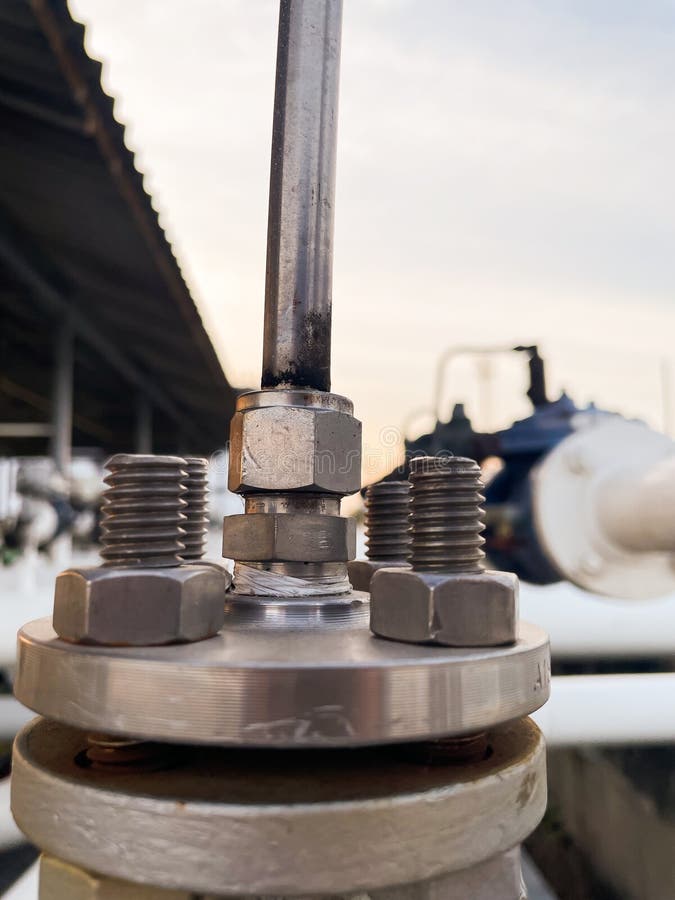
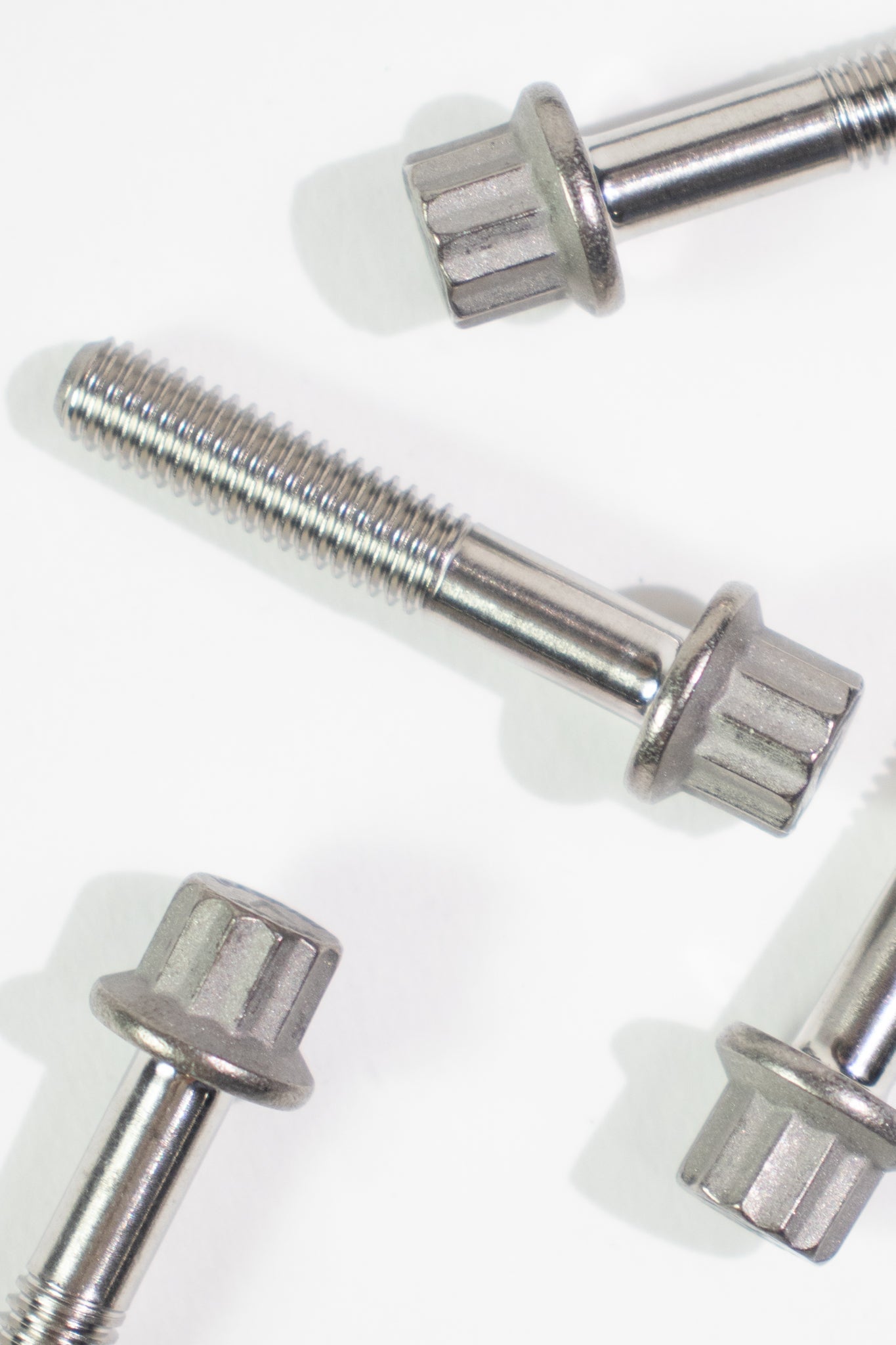
Seawater is unforgiving to fasteners. It combines high chloride concentration, dissolved oxygen, constant motion, crevices under washers, and in the Gulf region, water temperatures that sit between 30 and 38 °C for much of the year. A 316 stainless bolt that performs acceptably in inland air will pit under a washer face in flowing seawater; a duplex bolt that handles brackish water well can suffer crevice attack in stagnant splash-zone pockets; a carbon steel stud with any coating scratched to bare metal will rust through within a single marine season.
For the MENA region, seawater exposure is not a niche condition. It is the operating environment for desalination intake and outfall piping, coastal power station cooling water, offshore platform splash-zone hardware, LNG jetty fender and mooring components, ship and boat dock fittings, and the growing list of coastal and offshore renewable structures. On these projects, the bolting material has to hold up where stainless steels and duplex grades run out of corrosion margin.
That is where Monel 400 (UNS N04400, Werkstoff 2.4360) and its age-hardened relative Monel K500 (UNS N05500, Werkstoff 2.4375) come in. Both are nickel-copper alloys with decades of proven seawater service. 400 is the general-purpose, corrosion-resistant workhorse; K500 adds roughly twice the yield strength through age hardening for applications where mechanical load matters as much as corrosion resistance.
This article is written for materials engineers, EPC procurement teams, and QA/QC inspectors working on seawater, marine, desalination and offshore projects across the Middle East and North Africa. It covers how the two grades differ, where each one belongs on a flange schedule, what standards govern the fastener product form, the manufacturing and documentation controls that separate a usable Monel bolt from a problematic one, and the dimensions to put on an RFQ before you commit a purchase order.
Gangluo supplies Monel 400 and K500 studs, hex bolts, heavy hex nuts and custom fasteners for seawater, desalination, offshore and marine applications, with EN 10204 3.1 documentation and PMI support for project review.
For the wider range of oil, gas and seawater bolting materials, see our oil & gas fastener manufacturer and stud bolt center.
Gangluo Monel 400 / K500 Fastener Quick Reference
- Materials: Monel 400 (UNS N04400 / 2.4360), Monel K500 (UNS N05500 / 2.4375)
- Family: Nickel-copper solid-solution alloy (400), age-hardenable Ni-Cu-Al-Ti alloy (K500)
- Bar / forging standards: ASTM B164 (400 bar), ASTM B865 (K500 bar), ASTM B127 plate
- Non-ferrous fastener product references: ASTM F468 (bolts), ASTM F467 (nuts) where called up
- K500 condition: solution annealed + aged; hardness-controlled for sour service where applicable
- Sour-service: NACE MR0175 / ISO 15156-3 for K500, per environmental exposure tables and qualified hardness (typically ≤ 35 HRC); project approval required
- Thread systems: ASME B1.1 UNC/UNF/8UN, metric ISO on request
- Documentation: EN 10204 3.1 standard; 3.2 with third-party witness on request; PMI per lot
1. What Are Monel 400 and K500, and How Do They Differ?
Monel 400 is a nickel-copper alloy with nominally about 66% nickel and 31.5% copper. It is not a stainless steel and it is not a super duplex. It derives its corrosion resistance from the nickel-rich matrix rather than from a chromium passive film, which changes how it behaves in seawater.
The practical consequence is that 400 resists chloride attack in conditions where 316 stainless pits and crevice-corrodes. It is highly resistant to chloride stress corrosion cracking — far more so than austenitic stainless steels in conventional chloride service, though not immune under every combined environment — it holds up to fast-flowing seawater with low erosion-corrosion rates, and it tolerates a range of reducing acids and alkaline environments that would attack stainless steels. Its limitation is mechanical strength: in the annealed condition it is soft, with yield strength typically around 250–300 MPa.
Monel K500 starts from the same Ni-Cu base but adds aluminium (2.3–3.5%) and titanium (0.35–0.85%). Those additions allow the alloy to be age hardened — a controlled thermal cycle that precipitates Ni₃(Ti,Al) phases throughout the matrix. After aging, K500 reaches roughly 650–790 MPa yield strength, about double 400, while retaining essentially the same corrosion resistance. It is the preferred grade when a seawater-exposed fastener also has to carry real bolt load.
| Property | Monel 400 (N04400) | Monel K500 (N05500) |
|---|---|---|
| Strengthening | Solid solution (annealed) | Age hardening (Al + Ti) |
| Tensile strength | 550–690 MPa (annealed) | 965–1100 MPa (aged) |
| Yield strength Rp0.2 | 240–310 MPa | 650–790 MPa (aged) |
| Hardness | HB 110–150 typical | HRC 22–32 typical (aged) |
| Corrosion resistance | Excellent in seawater | Essentially equivalent to 400 |
| Magnetic response | Slightly magnetic | Slightly magnetic (aging increases response) |
| Typical fastener use | Bolts, nuts, tie rods where corrosion dominates | Studs, high-strength marine fasteners, shafts |
The selection rule is straightforward. If the joint is governed by corrosion and the clamp load is modest, 400 is usually the economical answer. If the joint is governed by strength — a high-pressure seawater flange, a large-diameter stud, a bolt subject to cyclic loading — K500 is the grade that carries the load without switching to a more expensive nickel-chromium-molybdenum alloy.
2. Why Monel for Seawater When Duplex and 625 Exist?
Specifiers often ask why they should not simply use super duplex 2507 or Inconel 625 everywhere on a seawater project. The answer is that each alloy sits in a different part of the cost-performance envelope.
| Material | Approx. PREN | Seawater pitting | Seawater SCC | Relative cost/kg | Typical seawater role |
|---|---|---|---|---|---|
| 316 / A4 | ~24 | Fails in warm seawater | Susceptible above ~60 °C | 1x | Coastal atmospheric only |
| Duplex 2205 | ~34 | Marginal in warm seawater | Good up to ~60–80 °C | 2–3x | Brackish, moderate chloride |
| Super duplex 2507 | ~42–45 | Good | Good | 4–5x | Seawater piping, flanges |
| Monel 400 / K500 | n/a (Ni-Cu, not PREN-driven) | Excellent in flowing seawater | Highly resistant (not universal) | 4–6x | Seawater intake, shafts, splash zone |
| Inconel 625 | ~42–47 | Excellent | Excellent | 7–9x | Sour + seawater, critical CRA bolting |
Three points worth stating explicitly:
Monel is far more resistant to chloride stress corrosion cracking than austenitic stainless steels. Nickel-copper alloys do not suffer the chloride SCC mechanism that cracks austenitic stainless steel at elevated temperature to anywhere near the same degree; in conventional chloride service they are effectively immune, though no alloy can be assumed immune in every combined environment. For Gulf seawater service where metal temperatures can reach 50–60 °C, this removes a failure mode that duplex and 316 cannot fully ignore.
Monel handles flowing seawater with very low erosion-corrosion rates. It has been used for decades on seawater piping, pump shafts and marine hardware because it does not suffer the high-velocity impingement attack that can affect some stainless and aluminium-bronze systems. In stagnant or low-flow seawater, localized attack can occur under deposits, which is why gasket faces and washer contact areas need the same attention as on any passive alloy.
Monel is not the answer for sour + seawater at high temperature. Where H₂S combines with warm seawater and chloride, the specification moves toward Inconel 625 or super duplex under NACE MR0175 limits. For that environment, see our Inconel 625 fasteners for sour and seawater service guide. Monel K500 does appear in NACE MR0175 / ISO 15156-3, but the familiar "35 HRC" ceiling is not a blanket number: acceptance depends on the ISO 15156 environmental exposure tables (H₂S partial pressure, pH, temperature and chloride level), the qualified hardness window, and project-by-project operator approval.
3. Typical Seawater and Marine Applications on MENA Projects
Monel fasteners are found across the water and offshore infrastructure that supports Gulf industry:
- Desalination plants. SWRO (reverse osmosis) and MSF/MED evaporator stations on the Saudi, Emirati, Omani and Qatari coasts use Monel 400 and K500 for pump flange bolting, intake screens, valve trim bolting, and high-pressure piping where chloride exposure is continuous.
- Seawater intake and outfall. Screen bars, trash rack hardware, tide gate bolts and submerged fasteners at coastal power and desalination intakes.
- Offshore platforms and jetties. Splash-zone handrail bolts, fender panel fasteners, mooring hardware, boat landing brackets, and deck drainage fittings that sit in salt-laden spray.
- Shipbuilding and dockyards. Hull-mounted equipment, stern gear, sea chest fasteners, and mooring cleat bolts where galvanic compatibility with bronze and aluminium-bronze castings matters.
- Marine heat exchangers. Tube sheet bolting and channel flange fasteners on seawater-cooled exchangers, where the alloy has to tolerate chlorides plus occasional process excursions.
- Coastal renewables. The newer wave of coastal wind and nearshore solar structures sits in the same C5-M atmosphere, and Monel fasteners appear on splash-zone and submerged connections where even 316L is considered too marginal.
On a typical desalination EPC package, the bolting schedule will mix materials: carbon steel flanges with hydrotest blinds, duplex 2205 on general process piping, 316 on coastal atmospheric stainless work, and Monel 400/K500 reserved for the seawater-wetted and splash-zone positions. The Monel line items are usually a small fraction of the total fastener count, but they are the ones that determine whether the plant stays leak-free through the first five years.
4. Standards Governing Monel Fasteners
Unlike carbon and alloy steels, where ASTM A193 / A320 series dominate, Monel hardware falls under the non-ferrous fastener and nickel alloy product standards.
| Item | Reference |
|---|---|
| 400 bar / rod | ASTM B164 |
| 400 plate / sheet | ASTM B127 |
| K500 bar / rod | ASTM B865 |
| Non-ferrous bolts (inch) | ASTM F468 |
| Non-ferrous nuts (inch) | ASTM F467 |
| Metric property-class parallel | ISO 898 does not cover nickel alloys; grade is cited by UNS and condition |
| Sour-service (K500) | NACE MR0175 / ISO 15156-3, per environmental exposure tables; hardness ≤ 35 HRC typical, project approval required |
| Pressure equipment | ASME SB164 / SB865 where the vessel code calls up material standards |
One distinction worth stating explicitly for EPC procurement: ASTM B164 and B865 are raw-material bar and rod standards — they govern the certified nickel-alloy bar from which the fastener is turned, not the finished fastener itself. The finished bolt, stud or nut product is called up separately to the non-ferrous fastener-product standards, ASTM F468 (bolts) and ASTM F467 (nuts), or to the project customer drawing where it supersedes them. A complete line item therefore names both the bar standard (B164/B865) and the fastener-product standard (F468/F467); naming only one leaves the other open and invites substitution.
A practical note for EPC procurement: many project specifications write "Monel K500 stud bolts, ASTM B865 bar, ASTM F468 bolts, NACE MR0175 hardness ≤ 35 HRC, EN 10204 3.1". That is a complete line item. A line that says only "Monel bolts" leaves the condition (annealed vs aged), the hardness, the thread system and the certificate level undefined — and that is how substitutions happen.
For the broader flange bolting logic that surrounds these studs, see our ASME B16.5 flange stud bolt selection guide.
5. Manufacturing Control: Bar Route, Threading and Aging
Monel 400 and K500 fasteners are not cold-headed in the high-speed carbon steel sense. They are produced from certified bar by CNC turning, head forging where appropriate, and thread rolling or cutting, with the K500 aging step inserted at the correct point in the cycle.
5.1 Raw material
Certified Monel bar arrives with mill chemistry and mechanical certificates. On receipt, the heat number is recorded and a PMI check (XRF) confirms the Ni-Cu balance before machining. Visual identification is not possible: 400 looks like K500, which looks like other nickel alloys, and a mill heat mismatch will not be visible until the hardware is in service.
5.2 Machining
Both alloys work-harden during machining. Cutting speeds are lower than on steel, tooling must be kept sharp, and feeds are controlled to avoid riding on a work-hardened surface layer. A shop that machines Monel the way it machines 316 will produce poor surface finishes, tool chatter and short tool life. Process experience is part of the product.
5.3 Thread production
Threads on Monel studs are typically rolled after the final heat treatment for K500, because rolling after aging introduces beneficial residual compressive stress at the thread root. Cut threads are used for short runs, large diameters or custom geometries. Thread gauging (GO / NO-GO ring and plug gauges) is performed on every lot.
5.4 K500 aging
K500 is solution annealed, then aged at a controlled temperature (typically around 540–600 °C, held to the alloy producer's practice) to develop strength. The aging cycle is part of the product specification, not an oven cycle chosen at the shop. For sour-service lots, hardness after aging must land within the NACE/ISO 15156 window for the specific environment (typically ≤ 35 HRC, subject to H₂S partial pressure, temperature and project approval), and that window is verified on every batch with hardness readings recorded on the certificate.
5.5 Galling and anti-seize
Like all nickel alloys, Monel galles when identical surfaces slide under load. Monel-on-Monel studs and nuts assembled dry are a predictable seizure event. A high-quality anti-seize compound compatible with seawater service, plus controlled torque, is standard. The lubricant and its assumed friction factor should be named in the bolting procedure so the torque table reflects reality rather than a dry-assumption number.
6. Quality, Documentation and MENA Project Acceptance
For coastal and offshore EPC work, the certificate pack is part of the acceptance. Gangluo supplies Monel fasteners with:
- EN 10204 3.1 mill certificate stating heat number, chemistry, tensile, yield, elongation and hardness.
- PMI report on incoming bar and on finished hardware where the project requires shop-side verification.
- Hardness record for K500 lots, with the 35 HRC ceiling explicitly stated for sour-service positions.
- Dimensional and thread gauge records, including thread class confirmation.
- Heat-traceability linking each finished lot back to the original mill heat of bar, so that years after installation the hardware can be re-verified.
- Third-party inspection arranged through SGS, Bureau Veritas, TÜV or owner's inspectors at incoming material and final release, where the project calls for 3.2 or witnessed release.
For Aramco, ADNOC and major operator audits, this documentation pack is what QA/QC inspectors ask for first. We have supplied Monel hardware for desalination and offshore packages that passed such audits on first review because the certificate trail was bundled by lot and by flange number rather than emailed piecemeal.
7. RFQ Dimensions and Supplier Evaluation Card
A Monel inquiry that names only the alloy and diameter will return a range of prices for different products. The RFQ should pin down the following:
- Material and condition: Monel 400 annealed, or Monel K500 solution-annealed + aged. State the hardness window (e.g. K500 ≤ 35 HRC for sour service).
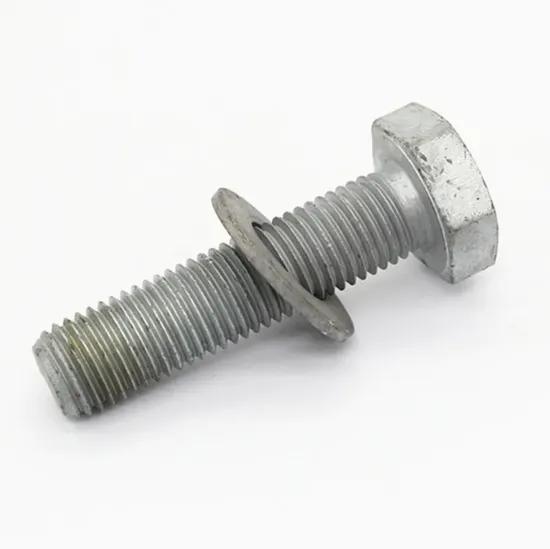
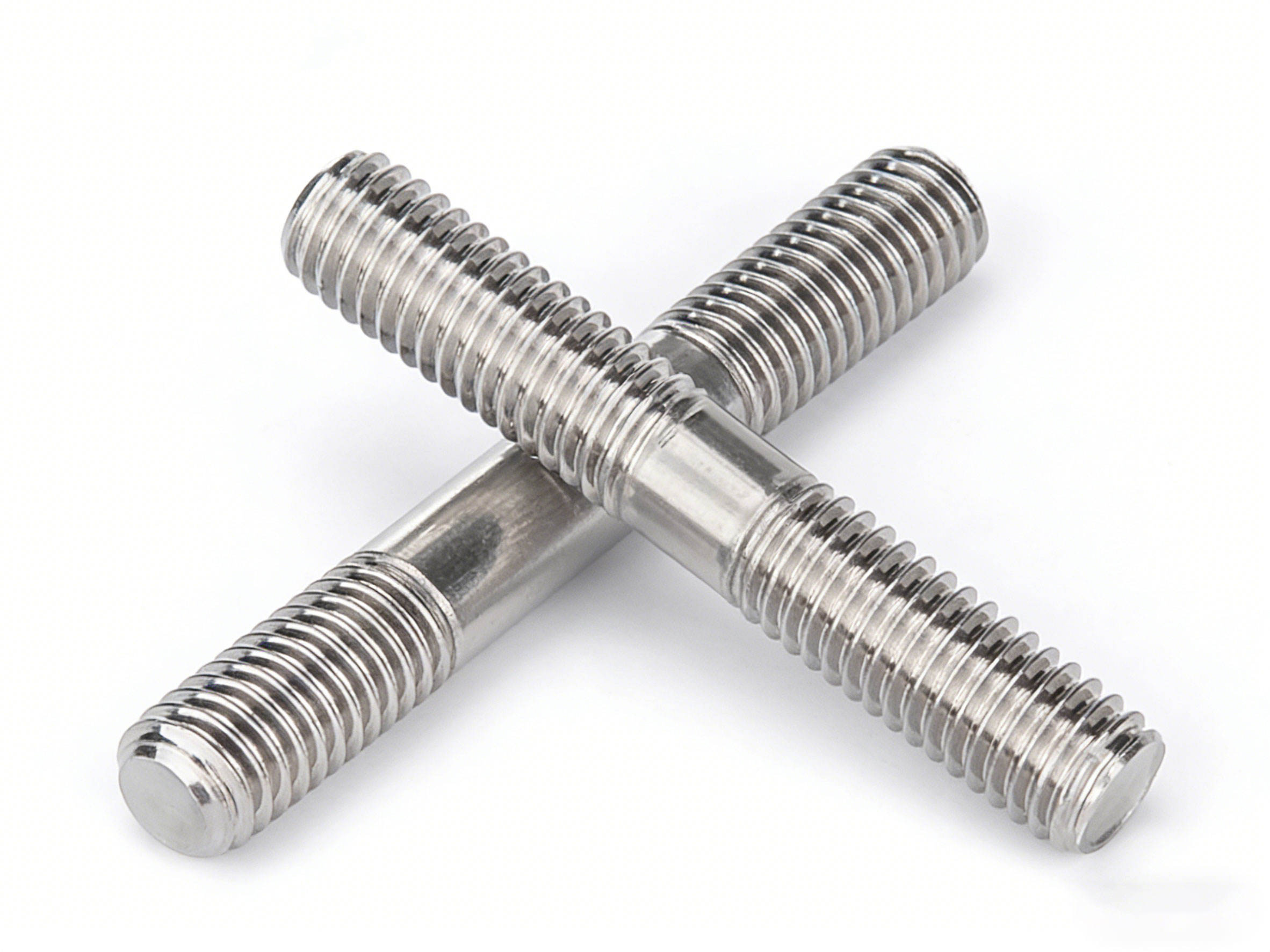
- Product: stud bolt, hex bolt, heavy hex nut, washer, or custom turned part.
- Geometry: drawing or dimensions — diameter, length, thread form (UNC/8UN/metric), thread class, head style, chamfer, marking.
- Quantity and sizes: full BOM with diameters and lengths.
- Certificate level: EN 10204 3.1 standard; 3.2 with third-party witness if required.
- PMI requirement: XRF on incoming bar, finished parts, or both.
- Anti-seize: whether supplied pre-lubricated or loose compound.
- Destination and packaging: seaworthy export packing, container consolidation to Jebel Ali, Dammam, Hamad or other MENA port.
Supplier Evaluation Card
| Dimension | What to verify | Why it matters |
|---|---|---|
| Material traceability | Mill cert per heat, PMI on incoming bar, heat number on parts | 400, K500 and other Ni-Cu alloys are visually indistinguishable |
| K500 aging control | Qualified furnace, charted cycle, post-aging hardness within window | Aged K500 properties come from the cycle, not the bar |
| Machining experience | CNC turning on nickel alloys, controlled speeds/feeds | Poor machining introduces work-hardened surface layers |
| Thread capability | Post-aging rolled threads or controlled cut threads, gauge records | Fatigue life depends on thread root condition |
| Documentation discipline | 3.1 pack per lot, PMI, hardness, dimensional records bundled | Operator and EPC QA stops missing certs |
| Third-party inspection | SGS / BV / TÜV / owner inspector on request | Critical offshore and desalination projects require witnessed release |
| MOQ flexibility | One-off custom sizes to multi-lot production runs | Desalination BOMs mix small and large line items |
| Lead-time realism | Bar availability + machining + aging + inspection quoted up front | Nickel alloy bar has longer lead times than standard stainless |
| Export experience | Consolidated container to MENA ports, customs documentation | Coastal EPCs need scheduled delivery to site, not port demurrage |
Quick Reference Specification Table
| Item | Specification |
|---|---|
| Materials | Monel 400 / UNS N04400 / 2.4360, Monel K500 / UNS N05500 / 2.4375 |
| Alloy type | Ni-Cu solid-solution (400), Ni-Cu-Al-Ti age-hardenable (K500) |
| Bar standards | ASTM B164 (400), ASTM B865 (K500) |
| Fastener product references | ASTM F468 bolts, ASTM F467 nuts where called up |
| K500 condition | Solution annealed + aged; ≤ 35 HRC for sour service |
| Tensile / yield (400 annealed) | 550–690 MPa / 240–310 MPa typical |
| Tensile / yield (K500 aged) | 965–1100 MPa / 650–790 MPa typical |
| Sour-service reference | NACE MR0175 / ISO 15156-3 for K500, per environmental exposure tables and project approval |
| Thread systems | UNC, UNF, 8UN per ASME B1.1; metric ISO on request |
| Typical products | Stud bolts, hex bolts, heavy hex nuts, washers, custom turned parts |
| Assembly | Nickel-compatible anti-seize; controlled torque; never dry Monel-on-Monel |
| Applications | Desalination, seawater intake/outfall, offshore splash zone, marine exchangers |
| Documentation | EN 10204 3.1, PMI, hardness, dimensional, heat traceability; 3.2 on request |
Related Guides
- Oil & Gas Fasteners Manufacturer and Stud Bolt Center
- Inconel 625 Fasteners for Sour and Seawater Service
- 316 Stainless Steel Flange Bolts for Oil and Gas Service
- Duplex and Super Duplex Fasteners Guide
- ASME B16.5 Flange Stud Bolts Selection Guide
- Monel K500 Fasteners for Oil and Gas Service
FAQ
What is the difference between Monel 400 and Monel K500?
Both are nickel-copper alloys with essentially the same seawater corrosion resistance. 400 is solid-solution annealed and lower strength (about 250–300 MPa yield). K500 adds aluminium and titanium and is age hardened to roughly double the yield strength (650–790 MPa aged). Use 400 where corrosion dominates and clamp load is modest; use K500 where the joint also carries significant mechanical load.
Is Monel 400 suitable for continuous seawater immersion?
Yes. Monel 400 has a long service record in flowing seawater, with low erosion-corrosion rates and high resistance to chloride stress corrosion cracking — far above austenitic stainless in conventional chloride service, though not claimed as universal under every combined exposure. It is commonly specified for desalination intake, seawater pump flanges and marine heat exchanger bolting. In stagnant or low-flow seawater under deposits or gaskets, crevice protection should still be designed in.
Can Monel K500 fasteners be used in sour service?
Within the limits of NACE MR0175 / ISO 15156-3, yes, but acceptance is not a matter of hardness alone: it depends on the environmental exposure tables (H₂S partial pressure, pH, temperature and chloride), the qualified hardness window — typically ≤ 35 HRC for K500 — and explicit project specification approval. Outside those conditions, sulfide stress cracking resistance is not assured. Every sour-service lot should have the hardness reading recorded on the certificate.
Do Monel fasteners need anti-seize compound?
Yes. Nickel-copper alloys gall when identical surfaces slide under high preload. Assembling Monel studs into Monel nuts dry is a common cause of seized threads and torn flanges. Use a seawater-compatible anti-seize and control torque to a procedure that accounts for the assumed friction coefficient.
Can Monel bolts be zinc plated or coated?
No. Monel is specified for its own corrosion resistance. Zinc, cadmium or electroplated coatings offer no benefit and can introduce hydrogen-embrittlement or contamination concerns on a high-nickel fastener. Parts are normally supplied in the machined or passivated condition.
What certificates should I expect with a Monel order?
A standard delivery includes an EN 10204 3.1 mill certificate (heat number, chemistry, tensile, yield, hardness), a PMI report confirming the alloy, thread gauge records and dimensional inspection. For K500, the aging record and post-aging hardness readings accompany the certificate. Third-party 3.2 inspection can be arranged for offshore and desalination-critical lots.
How does Monel compare with 316 stainless in seawater?
316 stainless has a lower PREN and is susceptible to pitting, crevice attack and chloride stress corrosion cracking in warm seawater. Monel 400 and K500 are highly resistant to chloride SCC in conventional chloride service (far above 316, though not universally immune under every combined environment) and resist pitting and crevice attack in flowing seawater far better. Monel costs more per kilogram, but on seawater-wetted positions where a 316 bolt would fail inside a few years, the alloy premium is small compared with the cost of an offshore or desalination shutdown.
Request Monel 400 / K500 Fastener Support
Send your seawater flange schedule, desalination BOM, splash-zone hardware list or custom drawing, together with the service condition (immersed, splash zone, atmospheric, sour seawater), the required condition (annealed 400 or aged K500 with hardness window), and the certificate level.
Gangluo's engineering team reviews material compatibility, manufacturing route and inspection scope before returning a line-by-line proposal. We supply Monel 400 and K500 studs, bolts, nuts and washers from certified bar, with EN 10204 3.1 documentation, PMI and heat traceability, and can consolidate Monel line items into a single container alongside carbon and alloy steel bolting for MENA delivery.
Engineering support: engineering@gangluo-fasteners.com
Share the flange schedule or drawing with your RFQ, and we will confirm material, condition and lead time.